

Bonington Gallery is delighted to present To Farse All Things, a two-person exhibition by William English and Sandra Cross, bringing together film, photography, sculpture, sound, and archival material formed independently and collaboratively over several decades.
To Farse All Things offers a rare opportunity to explore the intertwined lives and practices of two artists whose work resists categorisation. Through a shared and uncompromising commitment to experimentation, hospitality, and social engagement, English and Cross have cultivated a body of work that is as generous as it is radical. Their ten-year project, The Dining Room, can be seen as a living piece of performance art—emblematic of their broader practice which questions the boundaries between roles and purpose of cultural space. The lines between cast & audience, host & guest, artist & participant are constantly shifting and being shifted.
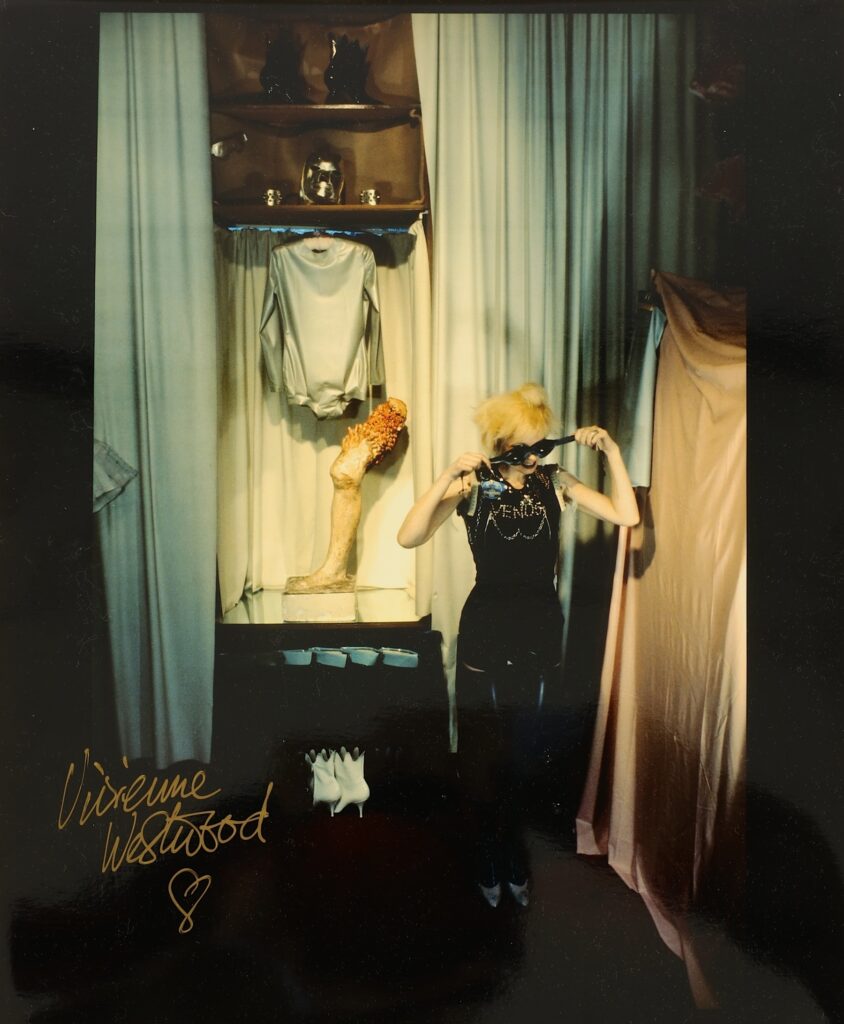
William English (b. Leicester) moved to London in the early 1970s to study filmmaking. In 1975, he produced a now-iconic series of photographs of Vivienne Westwood in her and Malcolm McLaren’s seminal punk boutique, SEX. The series, Venus with a Severed Leg, has become synonymous with the era, with writer Paul Gorman describing it as “the holy grail of punk photographs.”
Sandra Cross (b. Northamptonshire) began her career as a copywriter before relocating to London in the mid-1970s, where she worked for a number of prominent literary agencies and publishers. Her professional life introduced her to a network of West End eateries, sparking a deep and lasting interest in food as both a social and cultural medium. She began hosting suppers at home for friends and acquaintances, laying the foundation for a lifelong exploration of food as an intersection for connection, memory, and artistic expression.
The pair met in the late 1970s and soon embarked on a shared project that would channel their shared interests and become a defining period in their collaborative practice. Motivated by a shared excitement for hosting and an interest in organic and whole foods (progressive for that period), they pooled their limited resources to renovate the basement of a Victorian building near London’s Borough Market. The result was The Dining Room—a groundbreaking vegetarian restaurant (though they resisted the label) that operated for a decade. Serving dishes such as Kasha Knish amongst a programme of exhibitions, screenings, book launches, and gigs, The Dining Room was more than a restaurant. Its ethos was radically inclusive: customers ranged from Shakespeare’s Globe founder Sam Wanamaker and underground filmmaker Kenneth Anger to nurses finishing late shifts at nearby Guy’s Hospital. Staff were often friends who may have struggled to find work elsewhere, and leftover food was regularly shared with those in need.
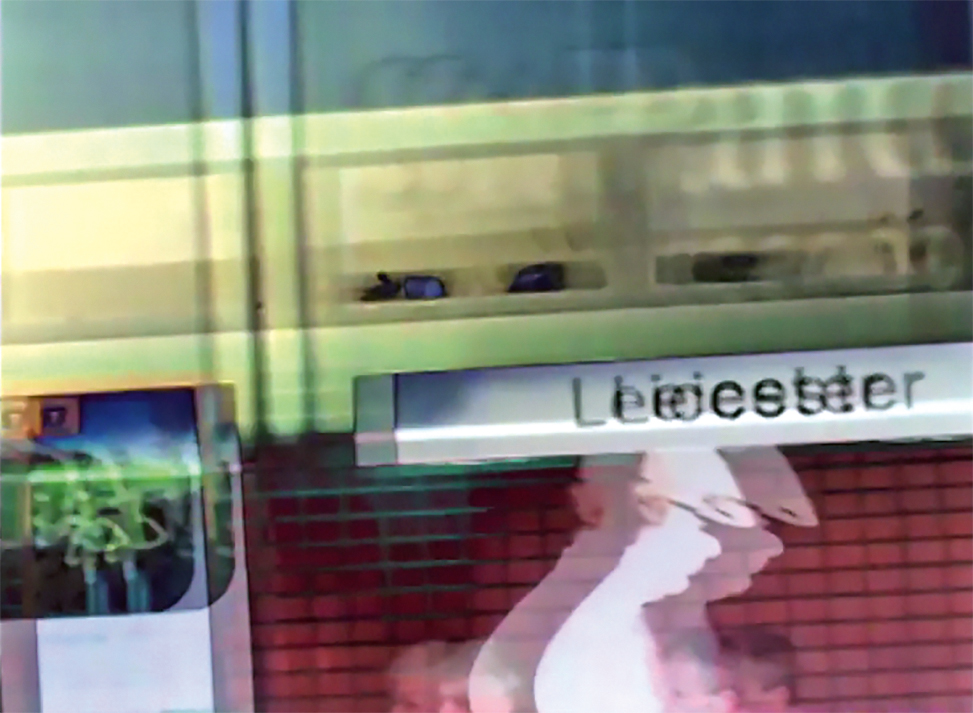
Following the closure of The Dining Room in 1990, Sandra continued to explore food as a subject through works such as What Did You Eat Today?, a series of filmed interviews examining personal relationships with food. Other notable works include MMs Bar (Trunk Records, 2011), a vinyl record composed of train catering announcements recorded during weekly journeys between London and Leicester, and Limbo (2019), a film narrated from journals written during this period whilst Sandra’s mother’s health was in decline, layered over footage of those same train journeys.
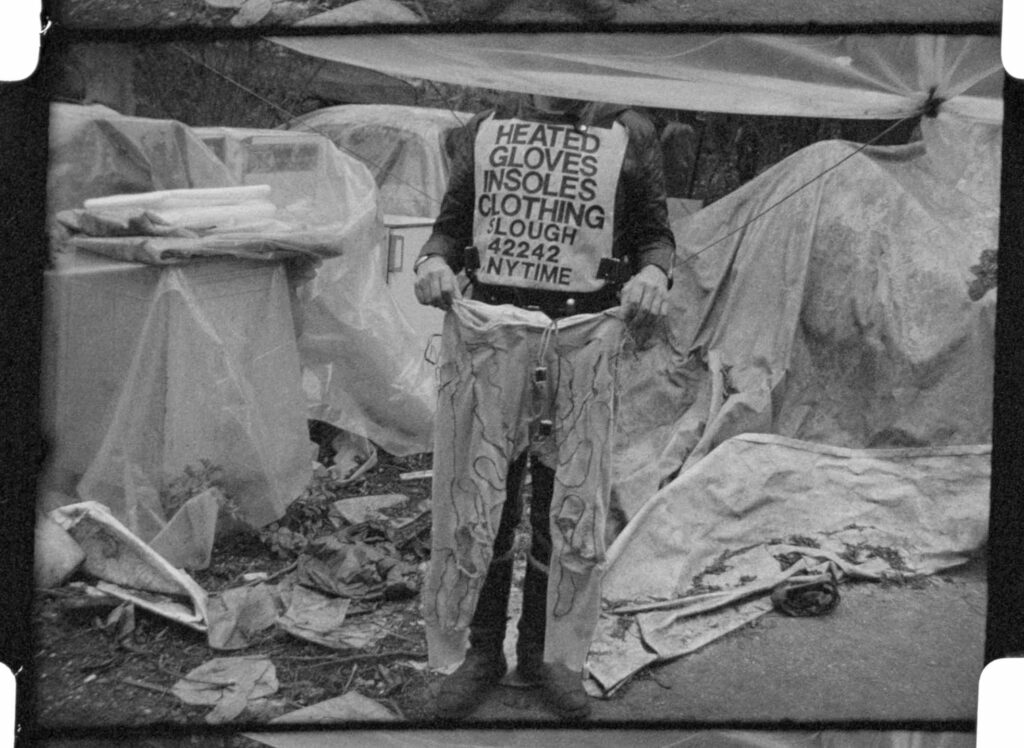
William continued to make films and work as a rare book dealer. His film Heated Gloves (2019) documents his friend and Dining Room regular Maurice Seddon, an eccentric inventor known for creating electrically heated clothing. The film features both intimate footage and clips from Seddon’s appearances on international talk shows, including David Letterman and Johnny Carson. After Seddon’s death, William discovered a trove of recorded phone calls spanning 30 years, which he compiled into the vinyl release The Seddon Tapes, Volume 1 (2018). These recordings—such as the surreal and humorous “Chest Freezer” exchange—formed the basis of William’s approach to his long-running Resonance 104.4 FM radio show Wavelength, which he has hosted for 15 years.
In 2020, William published Perfect Binding, a psychographic & counter-historical portrait of Leicester and changing attitudes towards fashion, music and art of the 1960’s and beyond, told and reflected through the lives of his family and childhood friends, including BOY boutique co-founder Stephane Raynor, artist and eccentric Jim Mellors (aka Victoria Ashley), and the late fashion photographer David Parkinson.
On the occasion of the exhibition, a follow-up to Perfect Binding entitled To Farse All Things (Designed by Daniel R. Wilson) will be published and made available from the gallery. This will be an anthology of work, interviews, and articles and is intended as a companion piece to the exhibition.
A broad selection of films by William & Sandra have been archived by LUX, an arts organisation that supports and promotes visual artists working with the moving image.
Exhibition curated by Tom Godfrey, Curator & Director of Bonington Gallery.
William English is a Leicester-born filmmaker, broadcaster, bookseller and co-founder with Sandra Cross of the organic vegetarian restaurant, The Dining Room (1980-1990). He is curator of the Captain Maurice Seddon (Royal Signals) archive, audio selections from which have been released as The Seddon Tapes (Paradigm Discs).
English’s long-running radio series – Wavelength – is a programme of multiple agendas, showcasing under-the-radar experimental music, poetry and art, broadcasting on Resonance 104.4 FM. His films include: Ex Library (2009), Heated Gloves (2015), It’s My Own Invention (2017) and City (1985). English is also the author of Perfect Binding: Made in Leicester (2019) – an experimental genre-defying documentary/counter-history/artist’s book, loosely themed around vanity/inertia and celebrity/obscurity in 1960s Leicester.
Sandra Cross worked as a features editor and deputy editor for IPC Magazines, before developing The Dining Room (active between 1980-1990), a vegetarian organic restaurant in London’s Borough Market, with partner and co-founder William English. This early experience of collaboration on projects where life and art intersect, guides her joint and solo actions whether in written work, film or sound. There is a focus on the lived experience documented and memorialised to celebrate and preserve what might otherwise have been lost. The founding of the restaurant initiated a quest to explore identity through the series What Did You Eat Today? leading to an association with the Mass Observation Archive, and the activity of recording announcements on the London-Leicester train in the MMs Bar (2011). These were described by one reviewer in Mojo as “destined for intense cultdom”.
Contemporary with this project was Limbo – a ten year study of her mother’s “probable Alzheimer’s” in words, sound, images, collages, and film, the substantial parts of which are a 2,000 page journal, 96-hours’ worth of recordings, and an hour-long film. Limbo (2019), the film, was presented at the British Library, and the recordings archived by Stephen Cleary, The British Library’s Lead Curator for Literary and Creative Recordings, whose enthusiasm was expressed via a suggestion that the readings over the film in particular were reminiscent of the ethos and articulation of Mark E. Smith, lead singer in the post-punk band The Fall. Cross has suggested that a quote from La-Bas by Joris-Karl Huysmans best identifies her approach to life:
“It is foolish to let my thoughts wander this way (…) but daydream is the only good thing in life. Everything else is uglier and empty”.
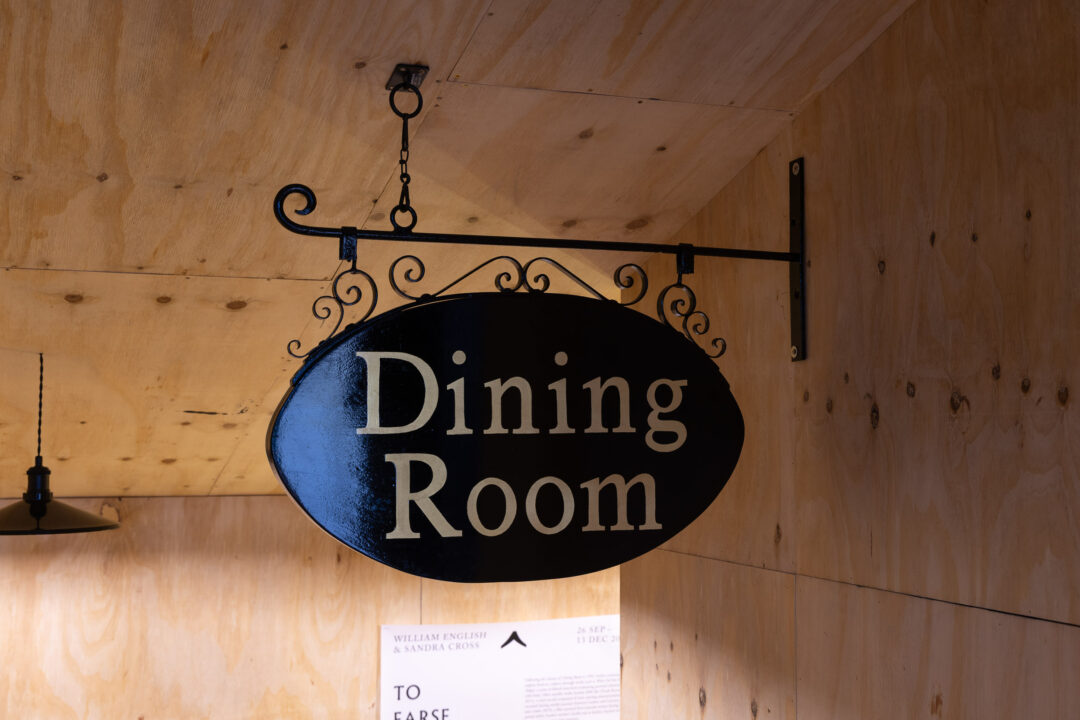
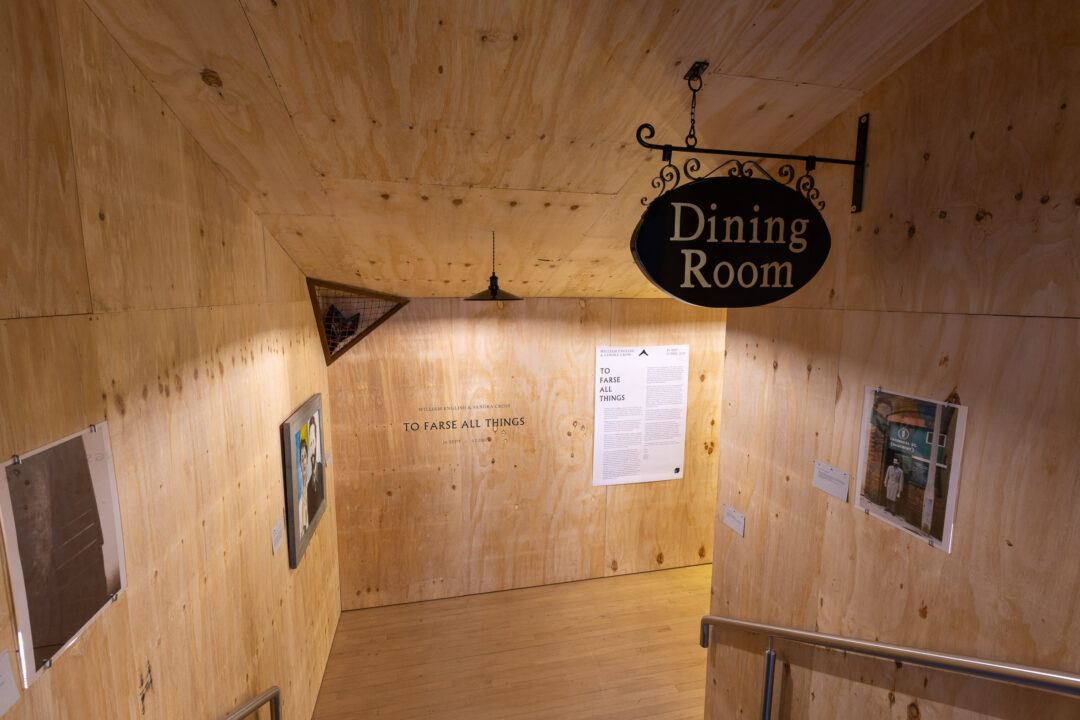
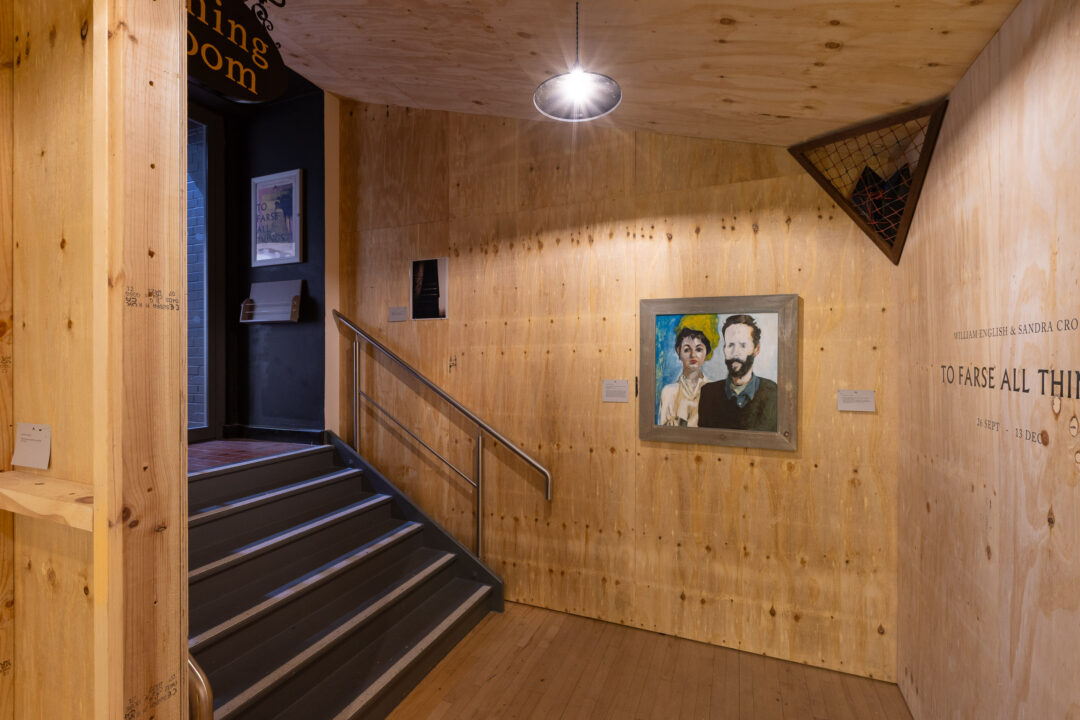

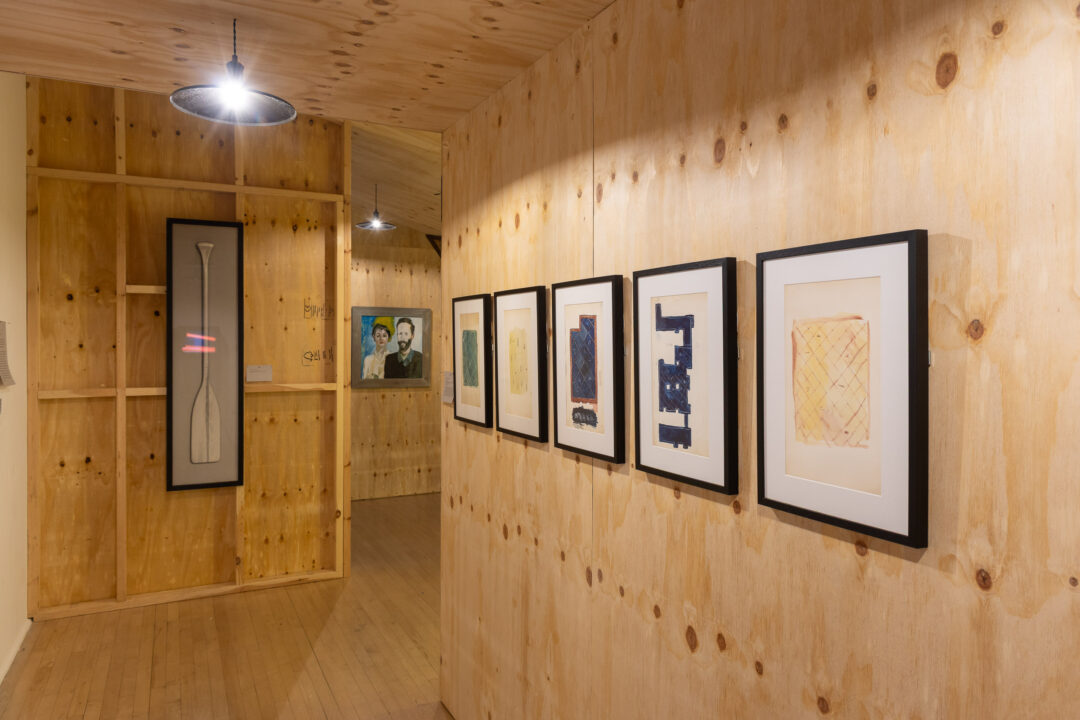
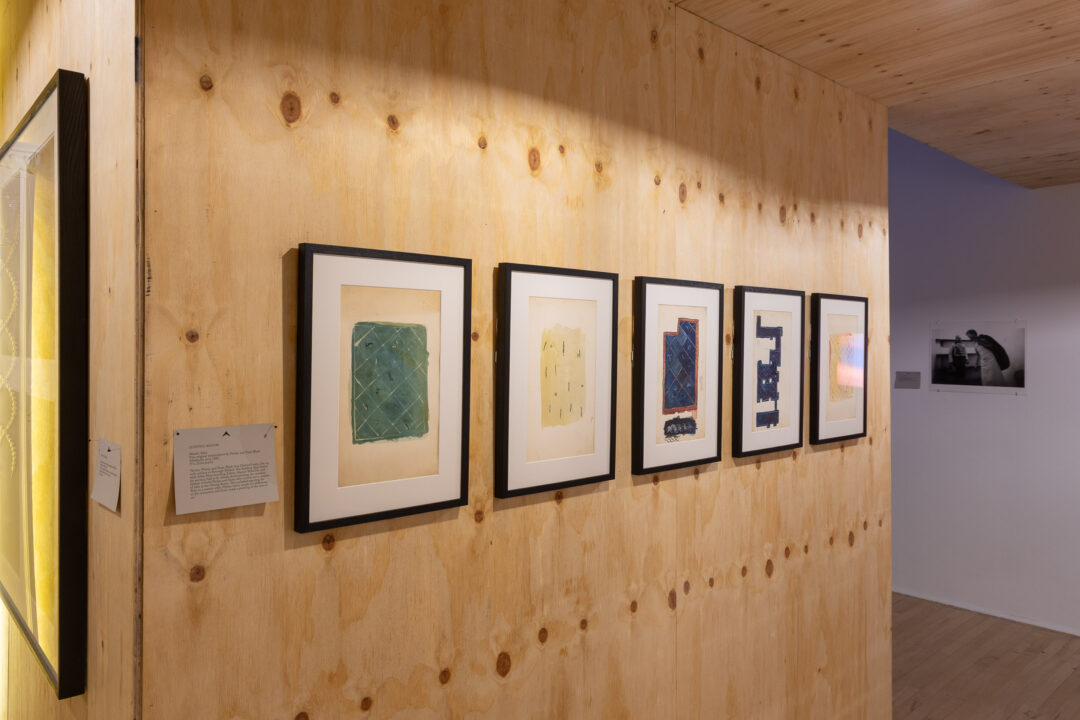
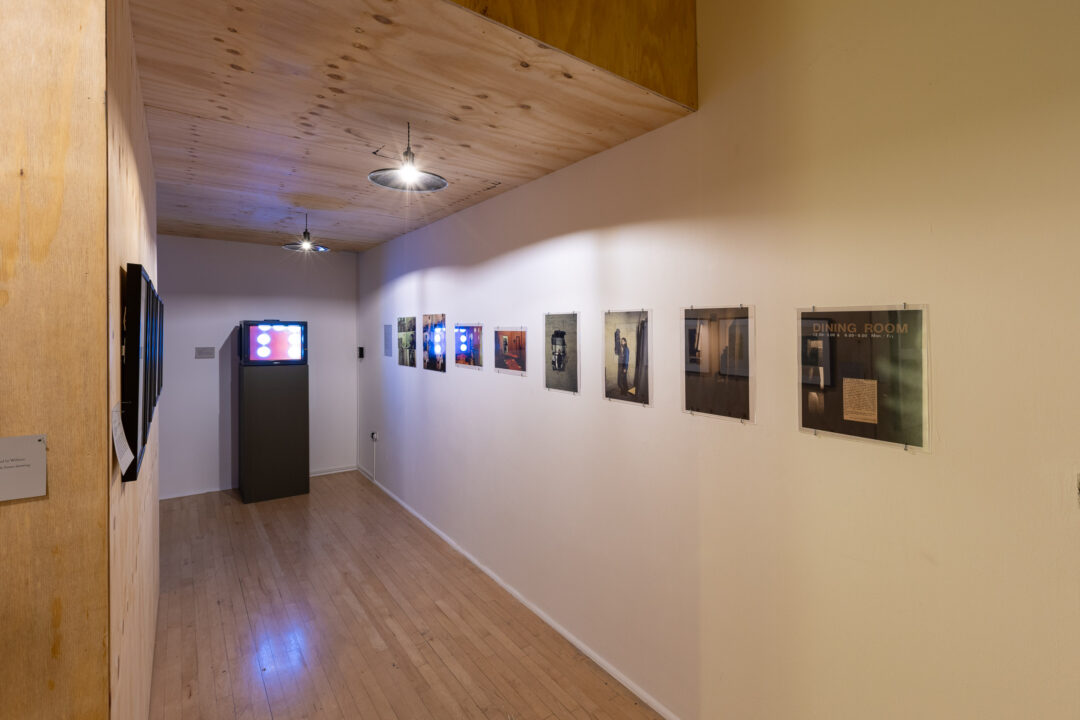
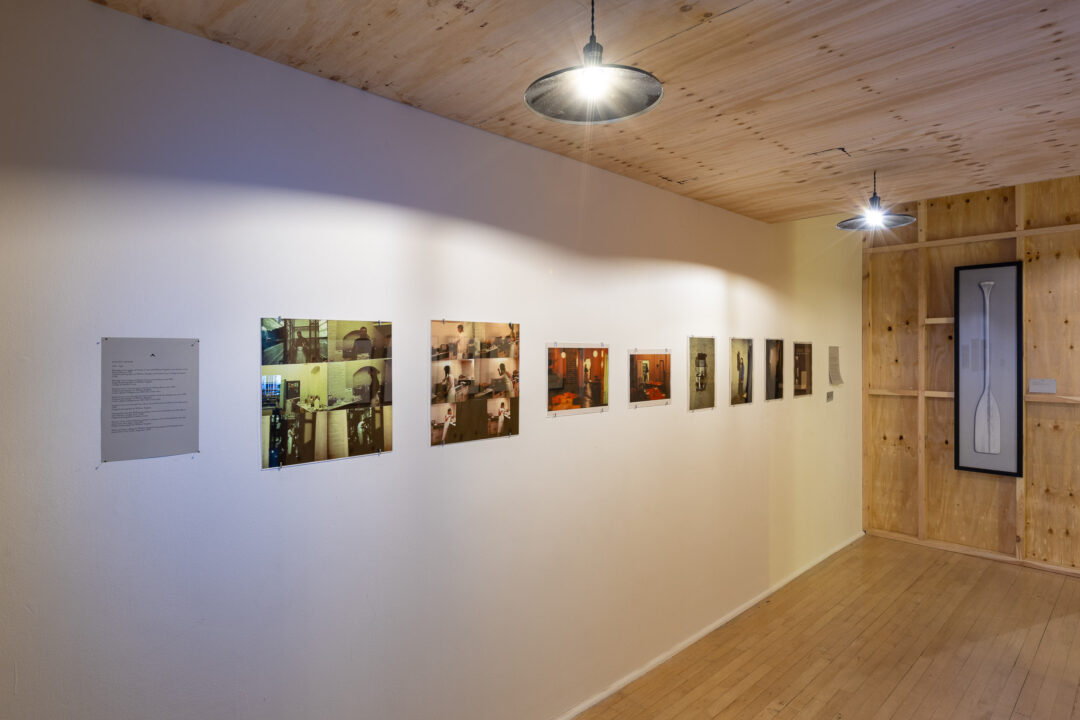
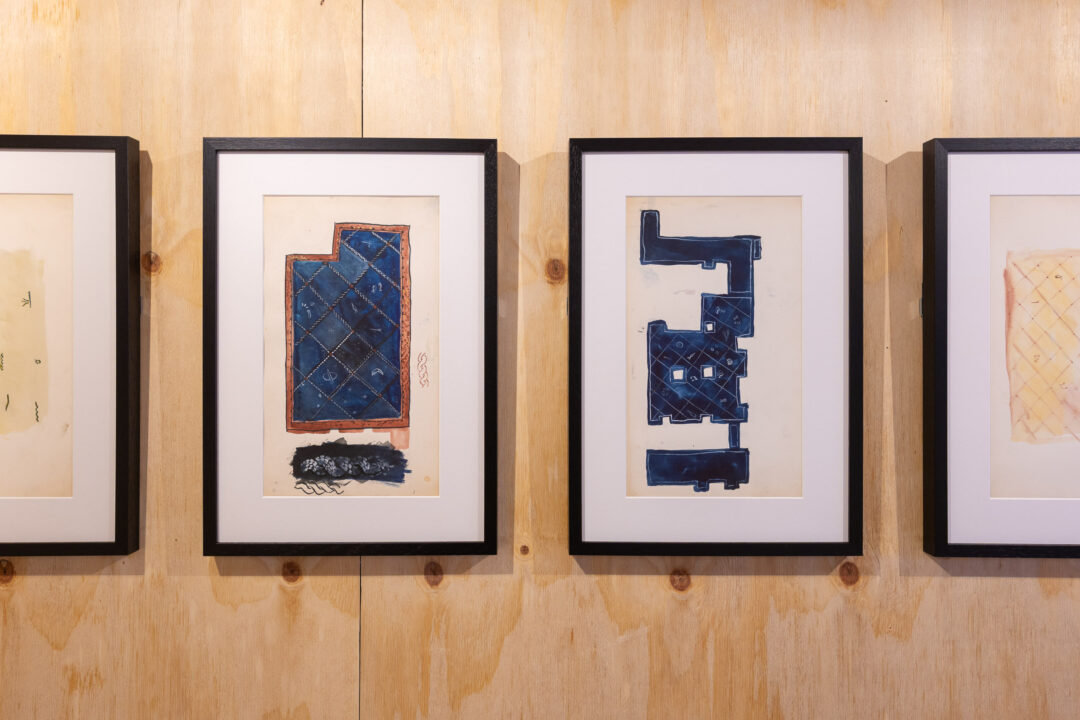
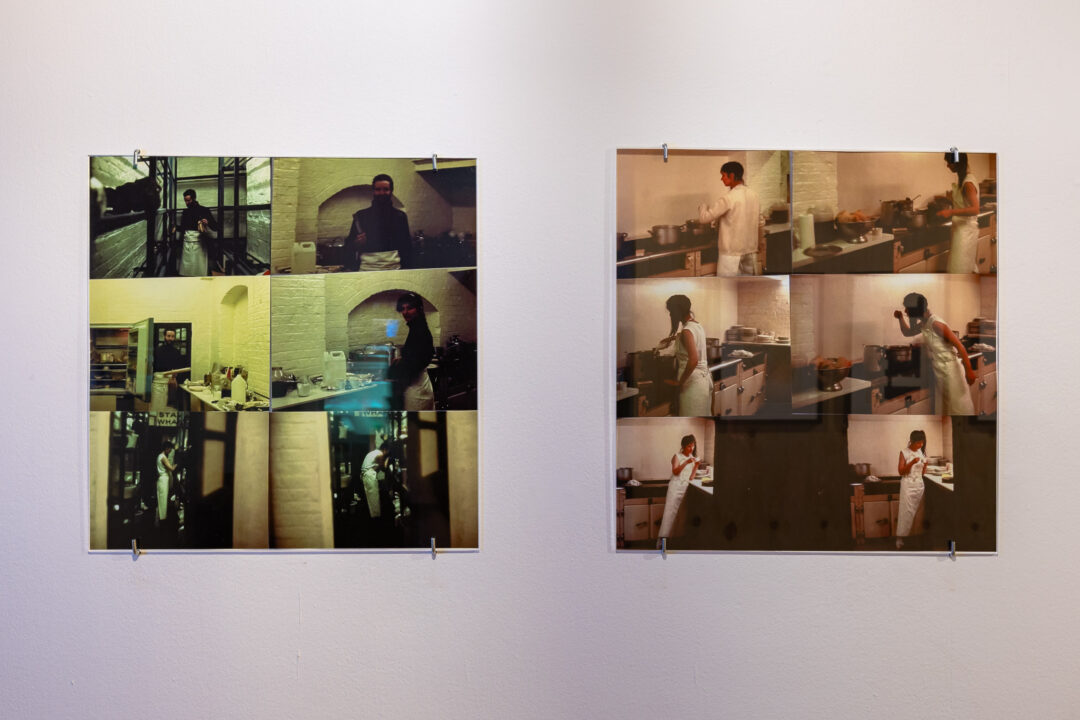
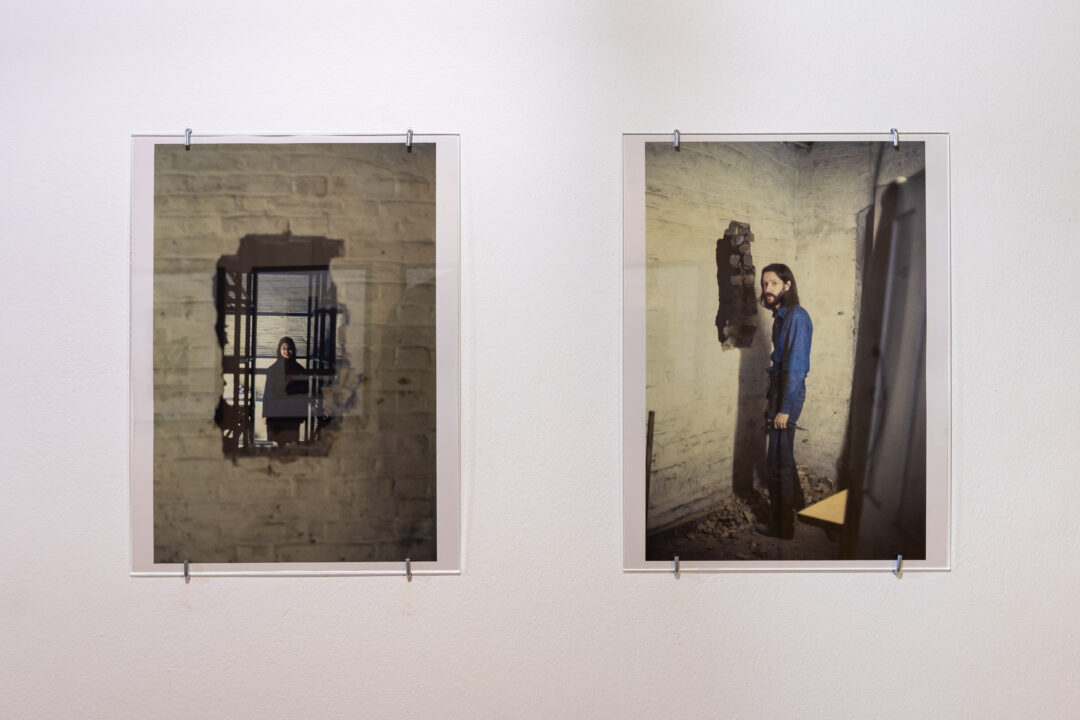
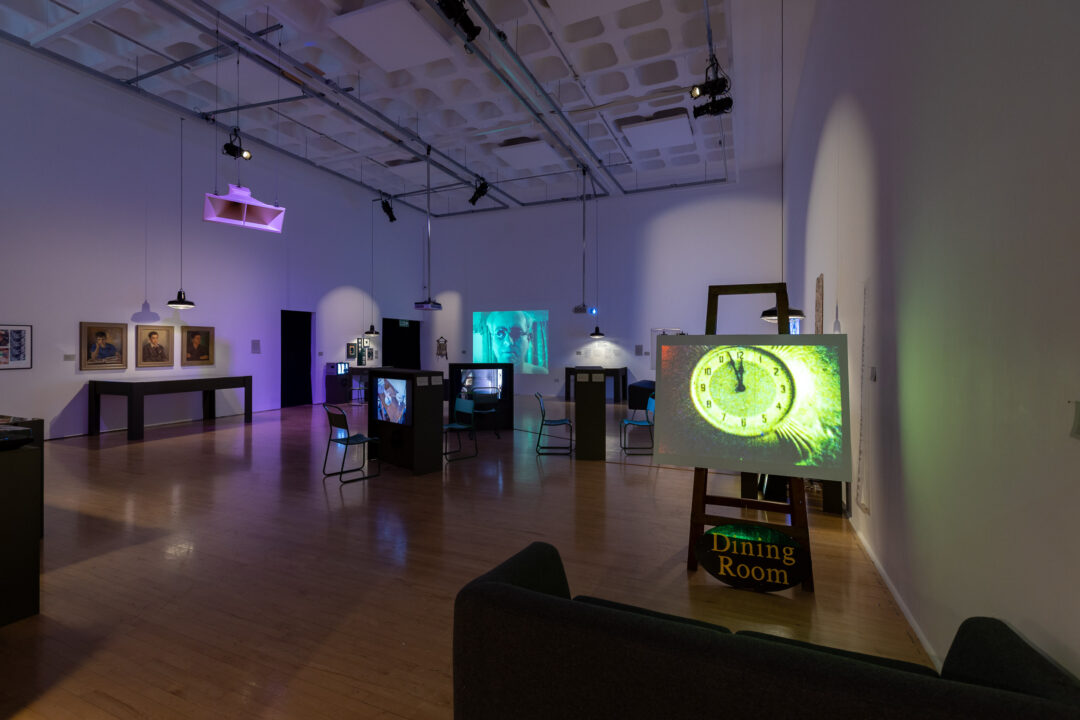
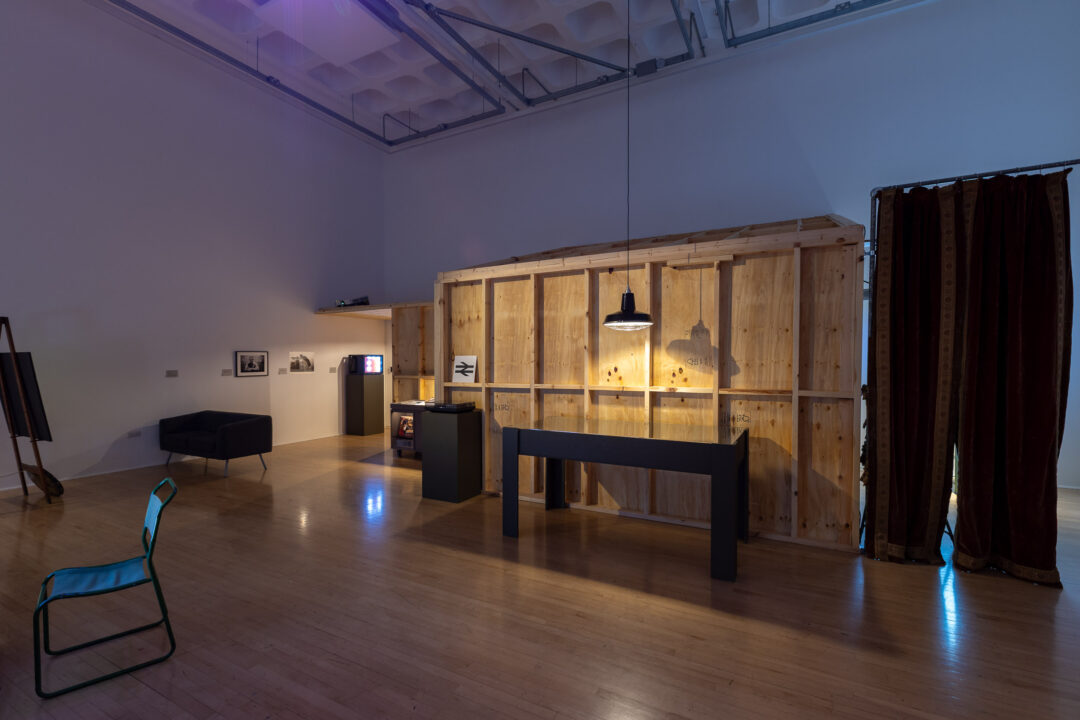

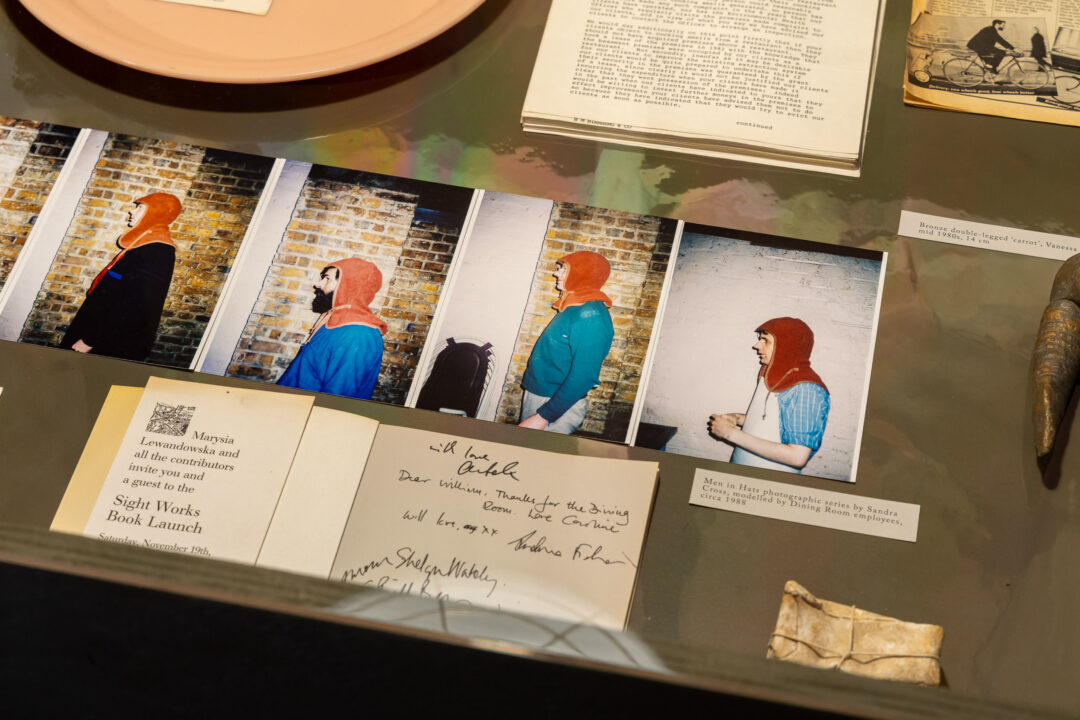
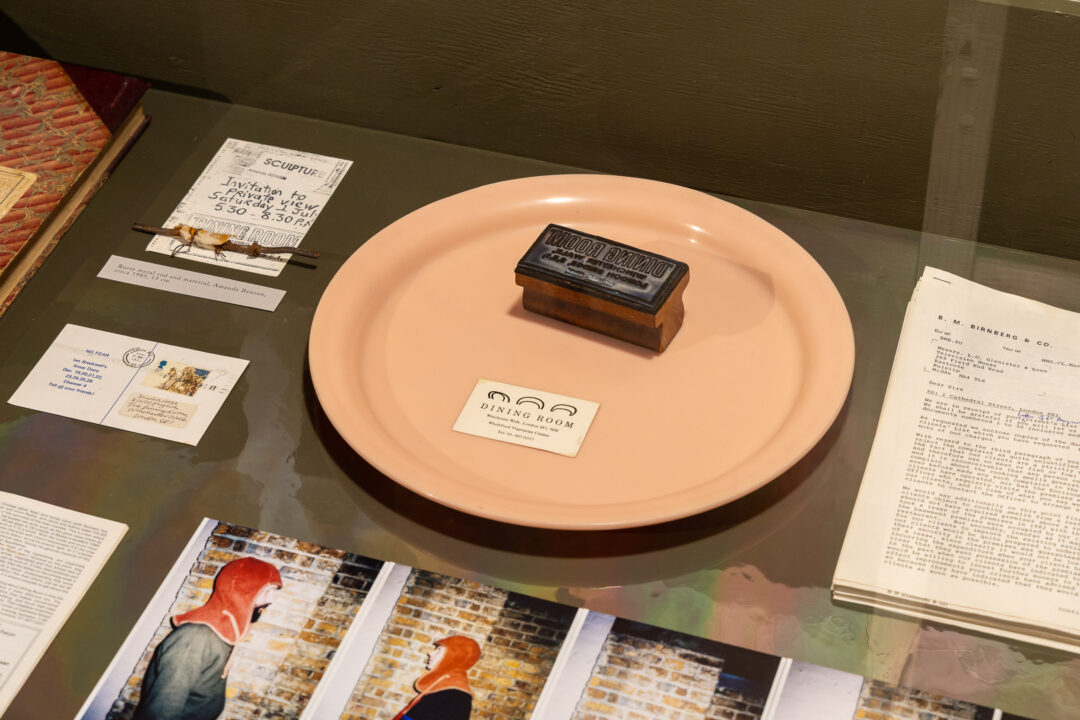
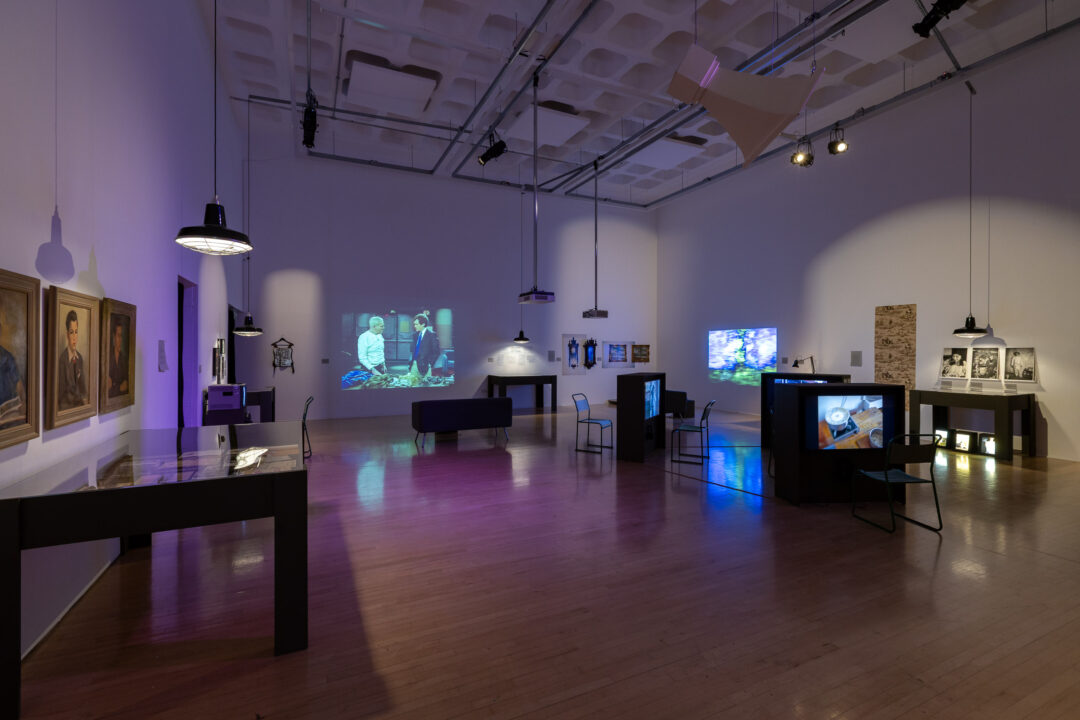
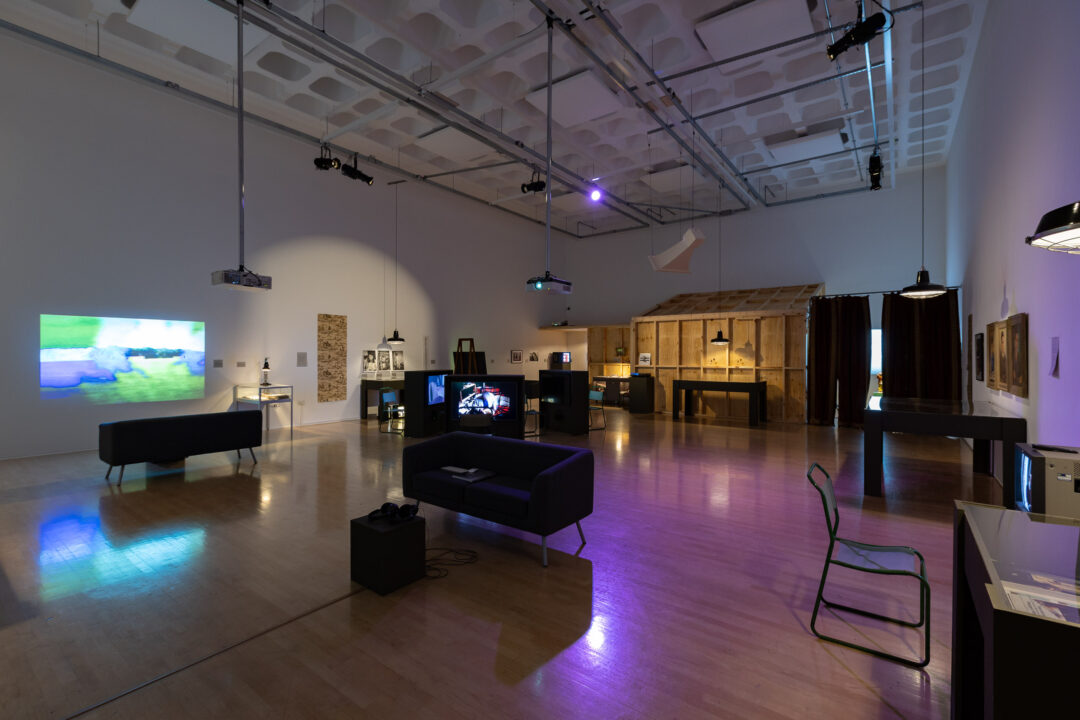
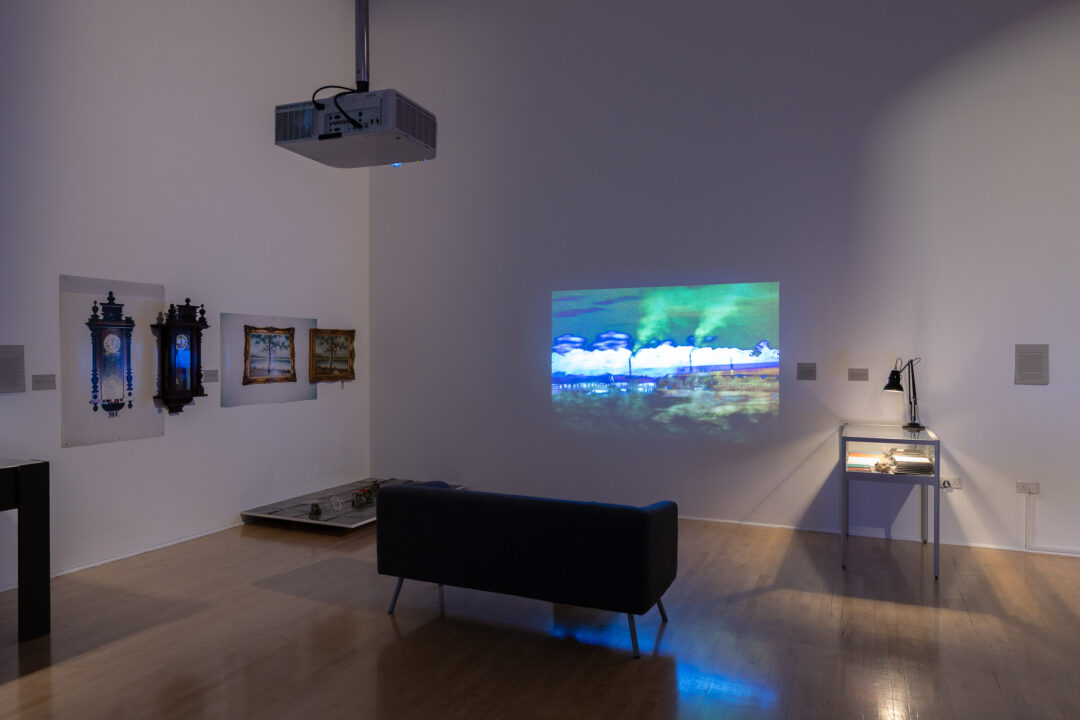
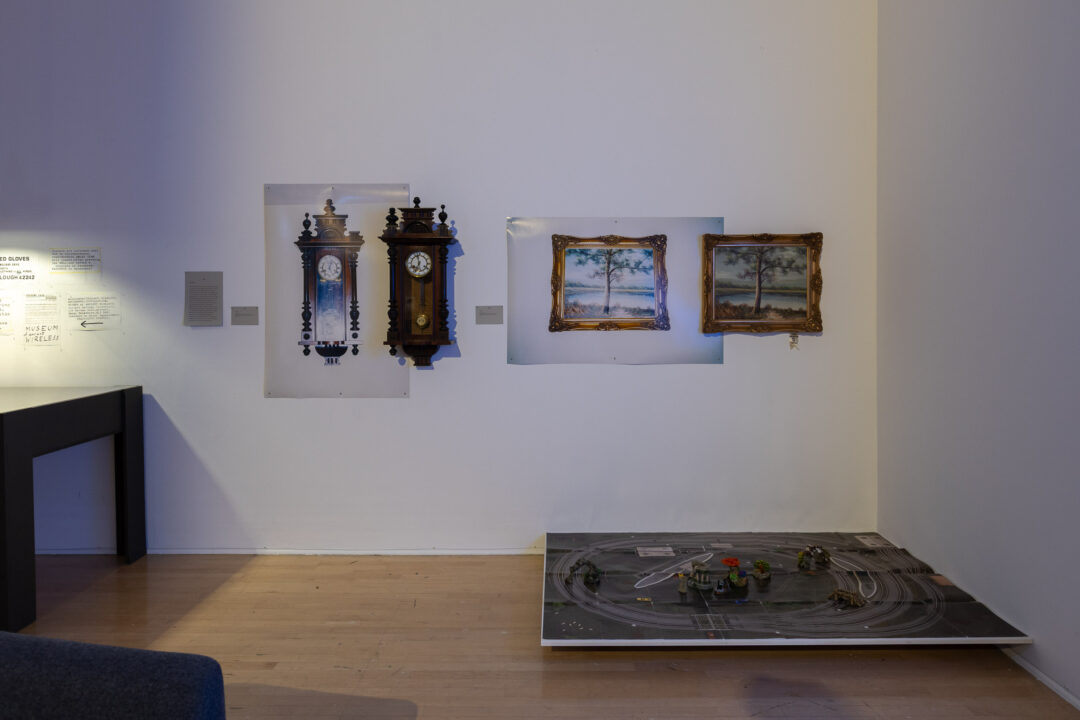

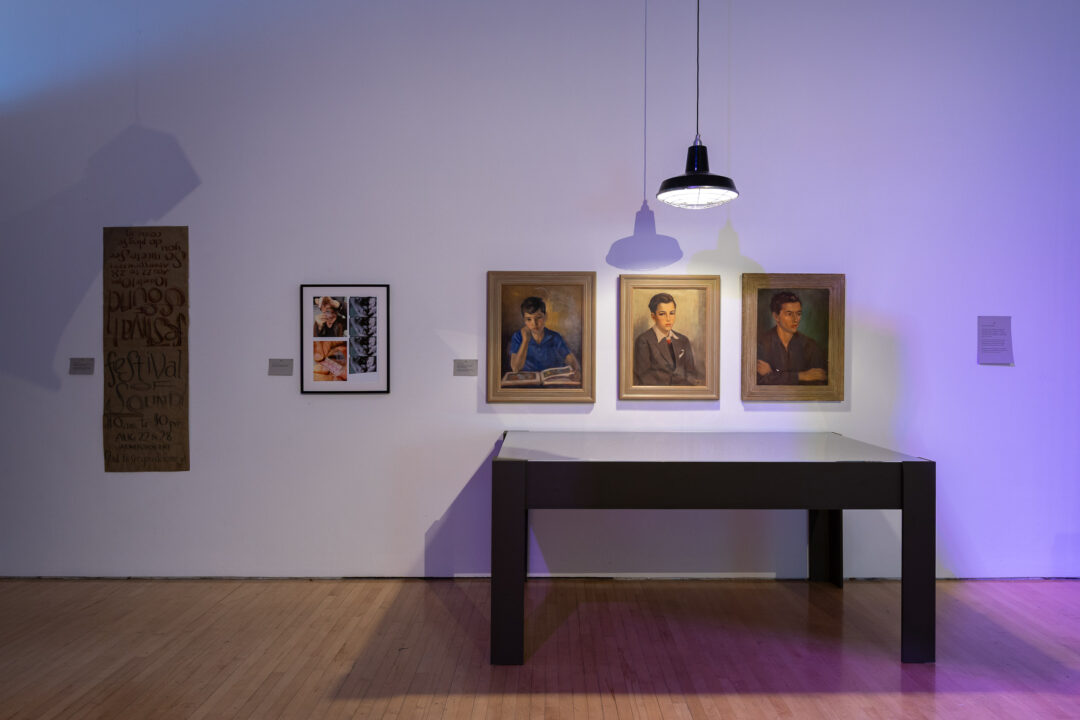
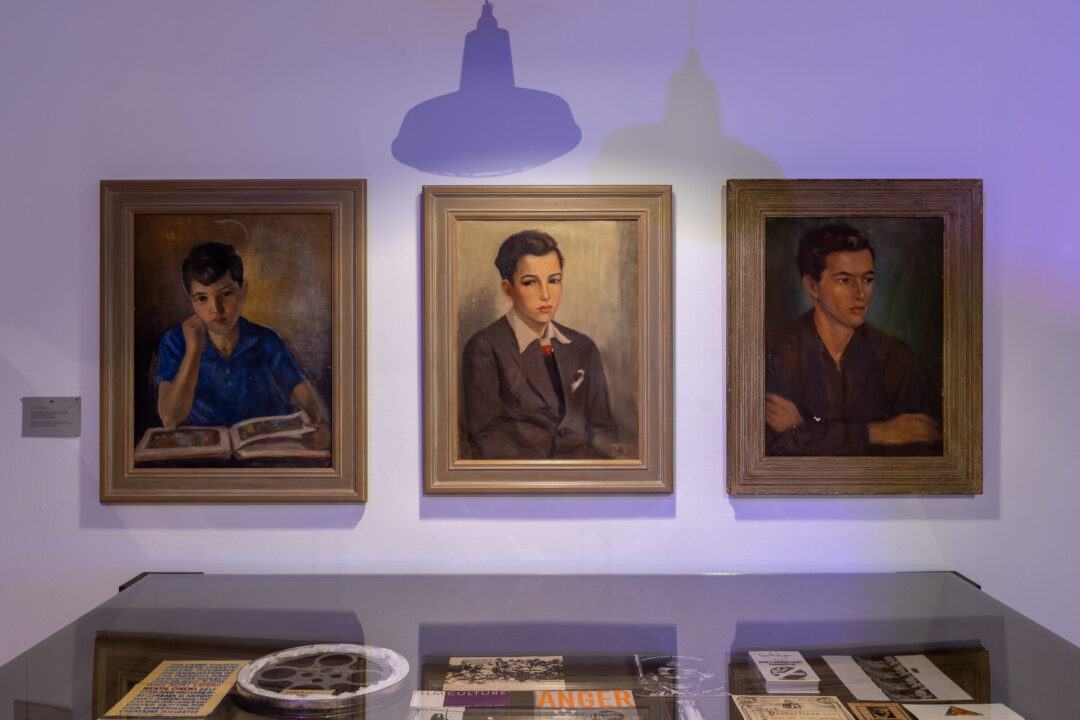
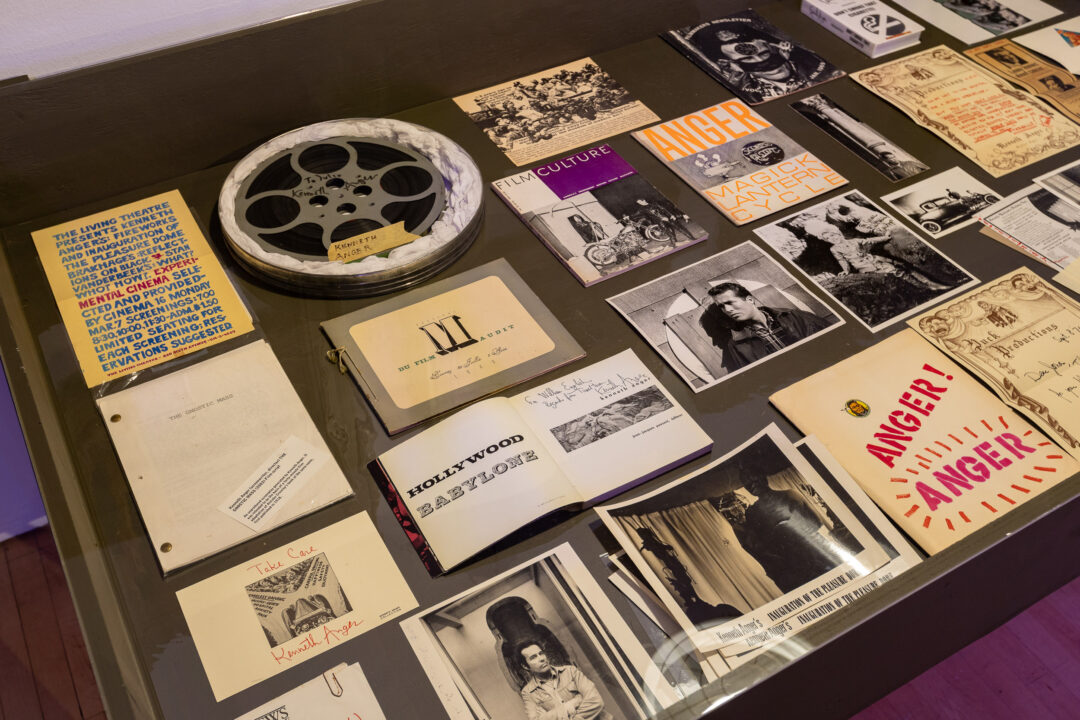

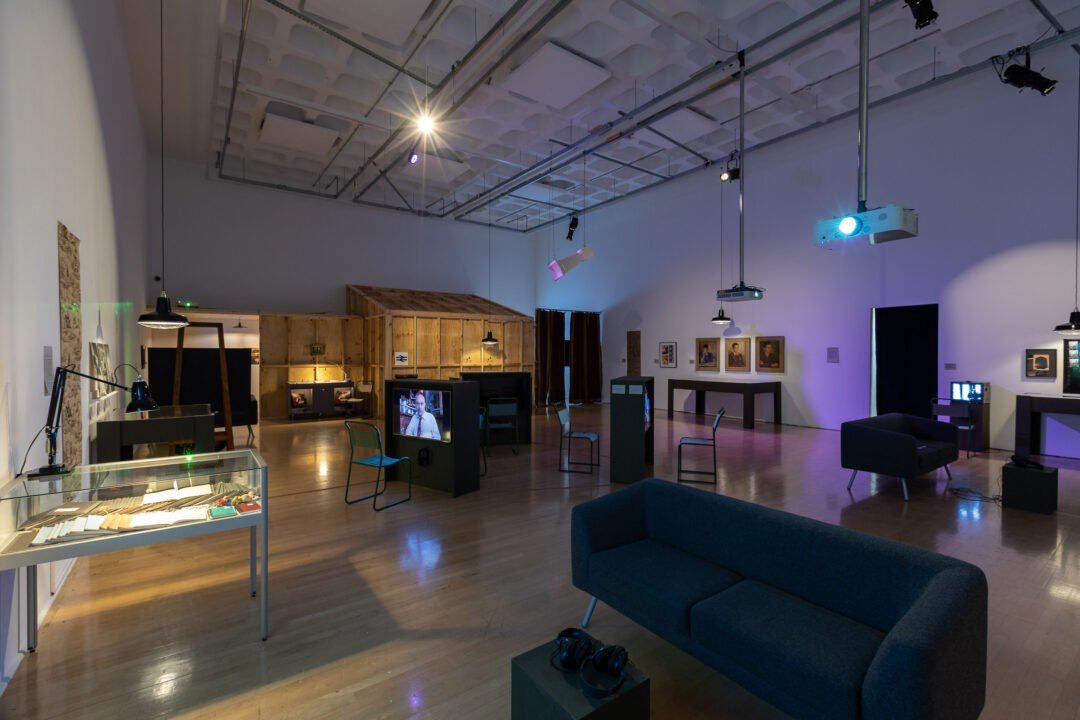
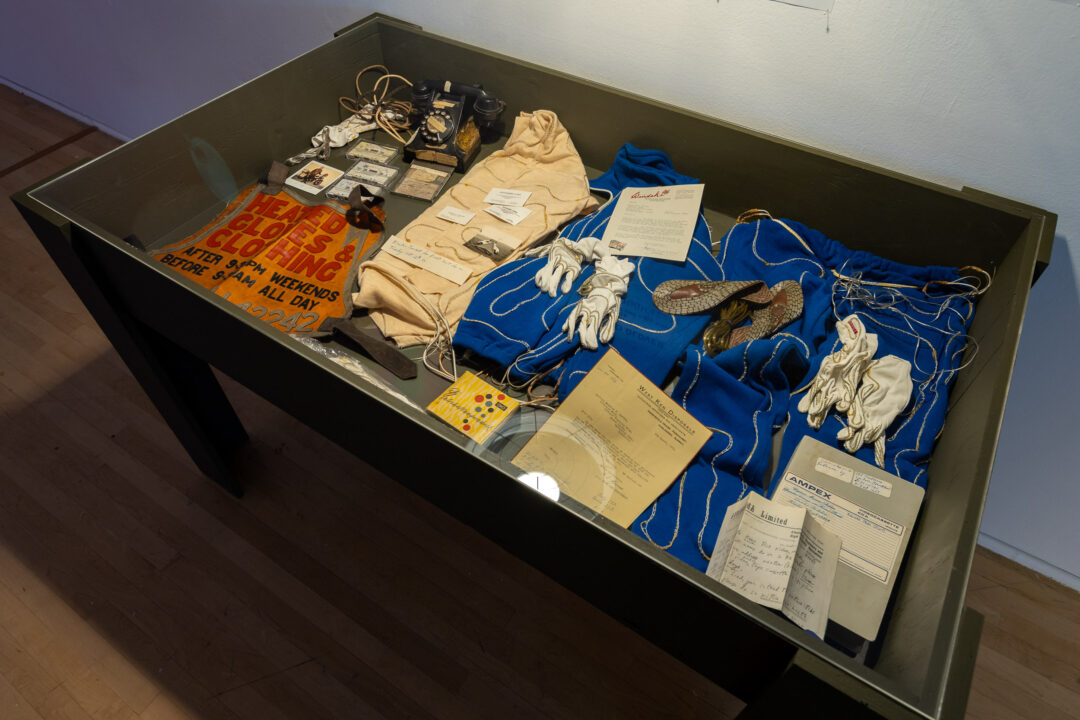
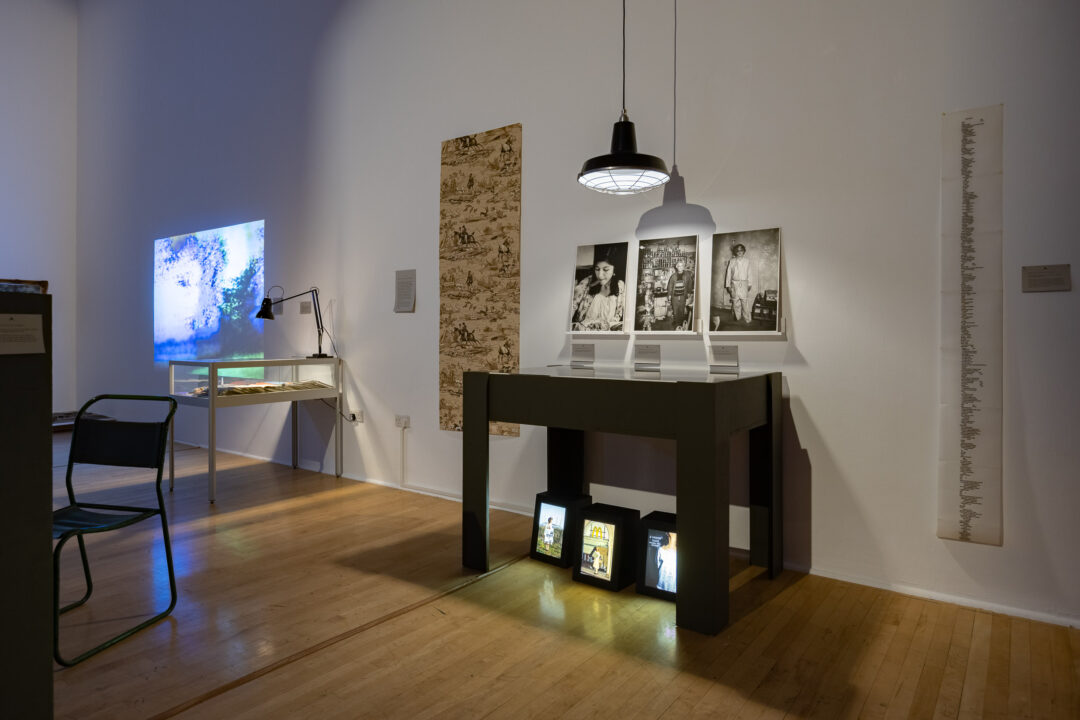
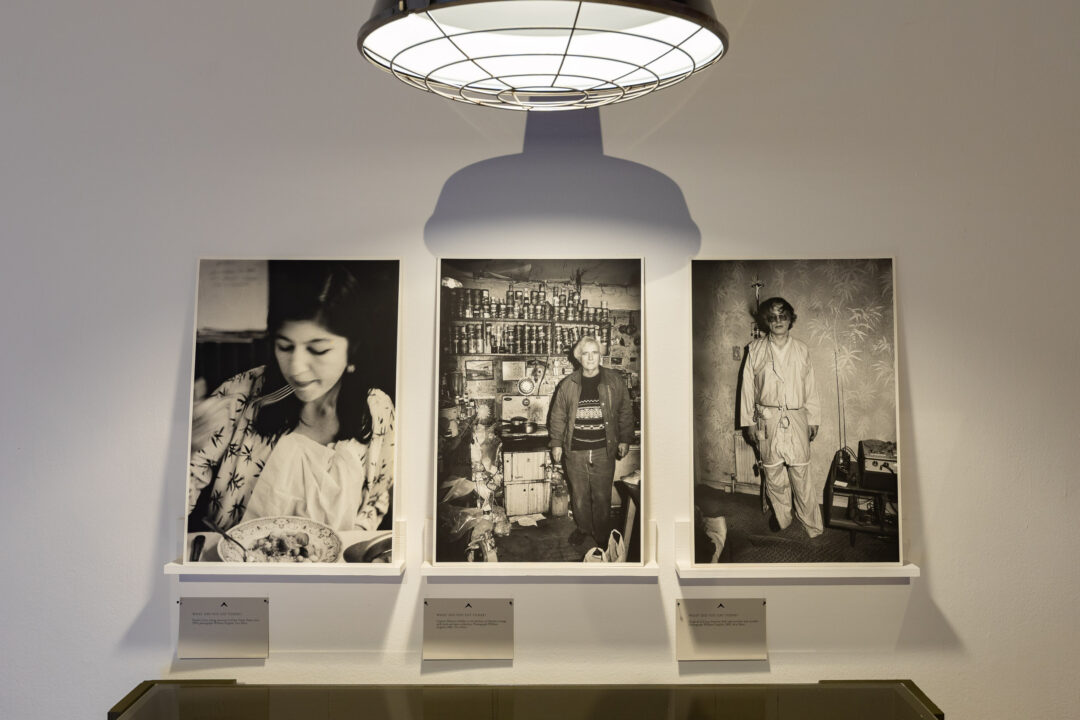
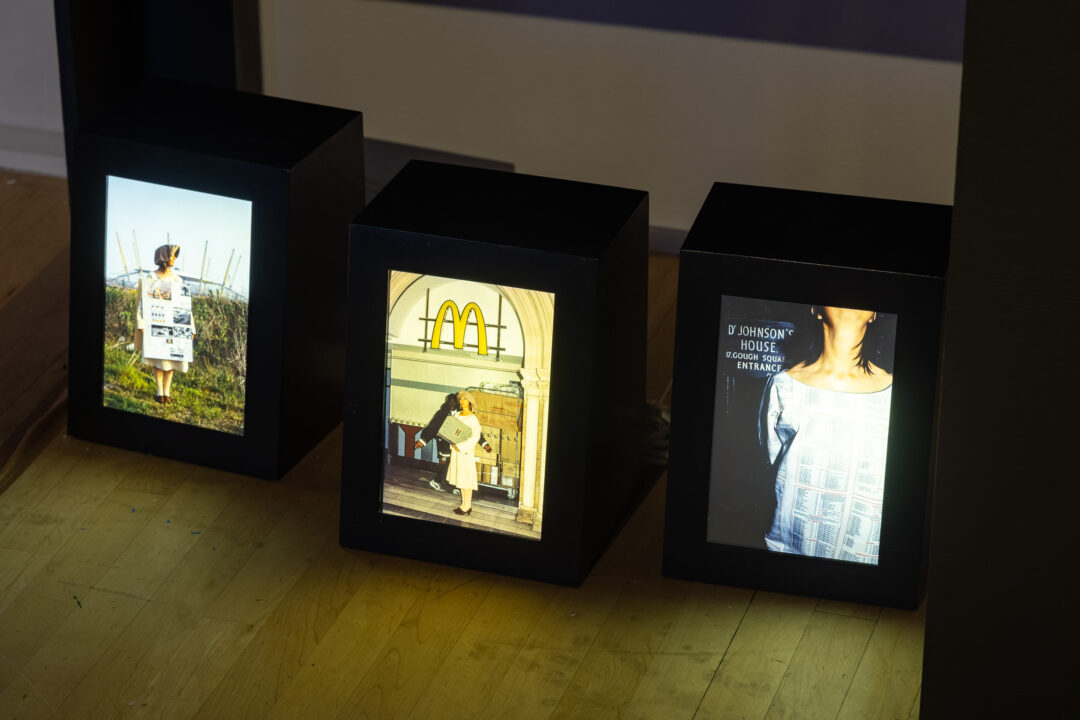
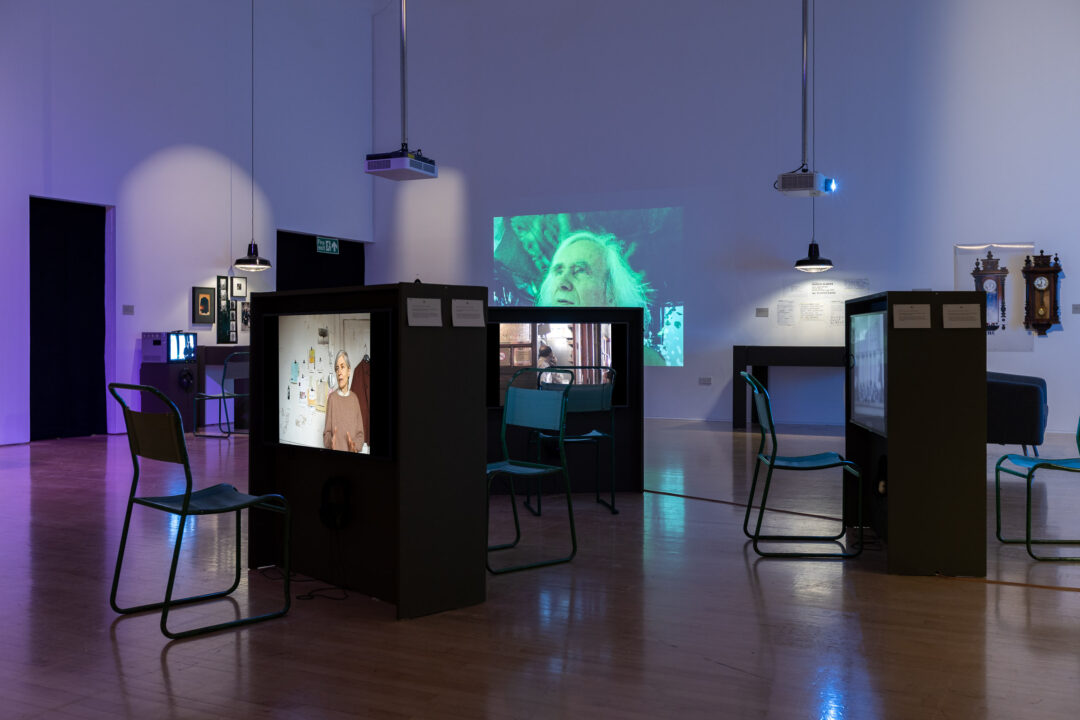
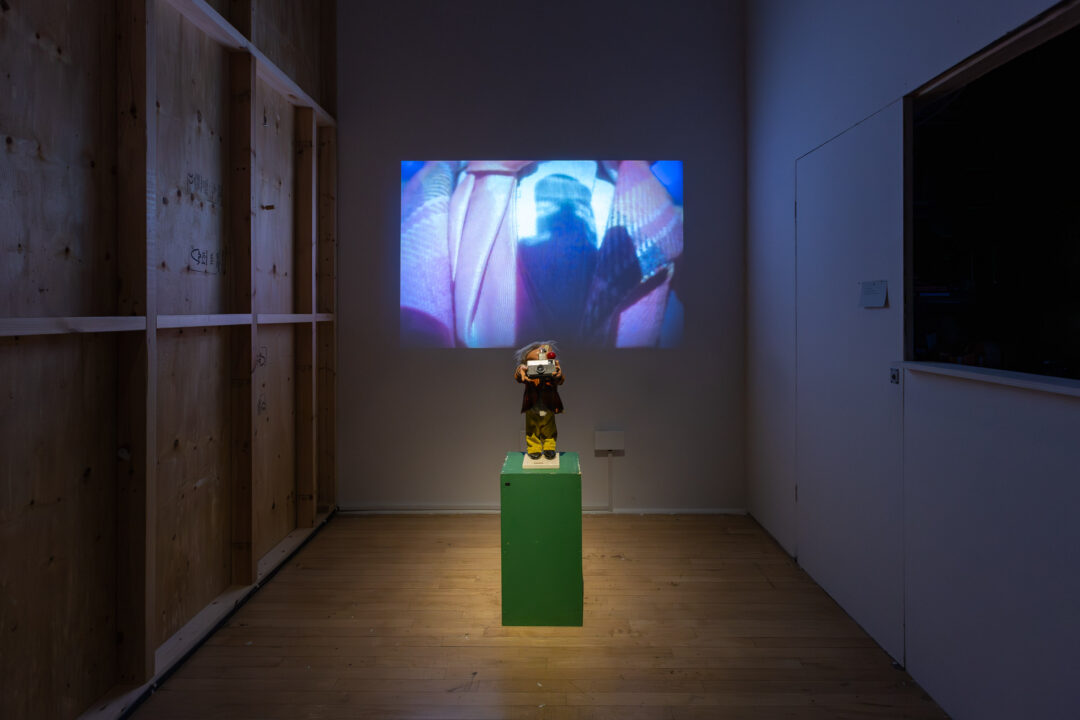
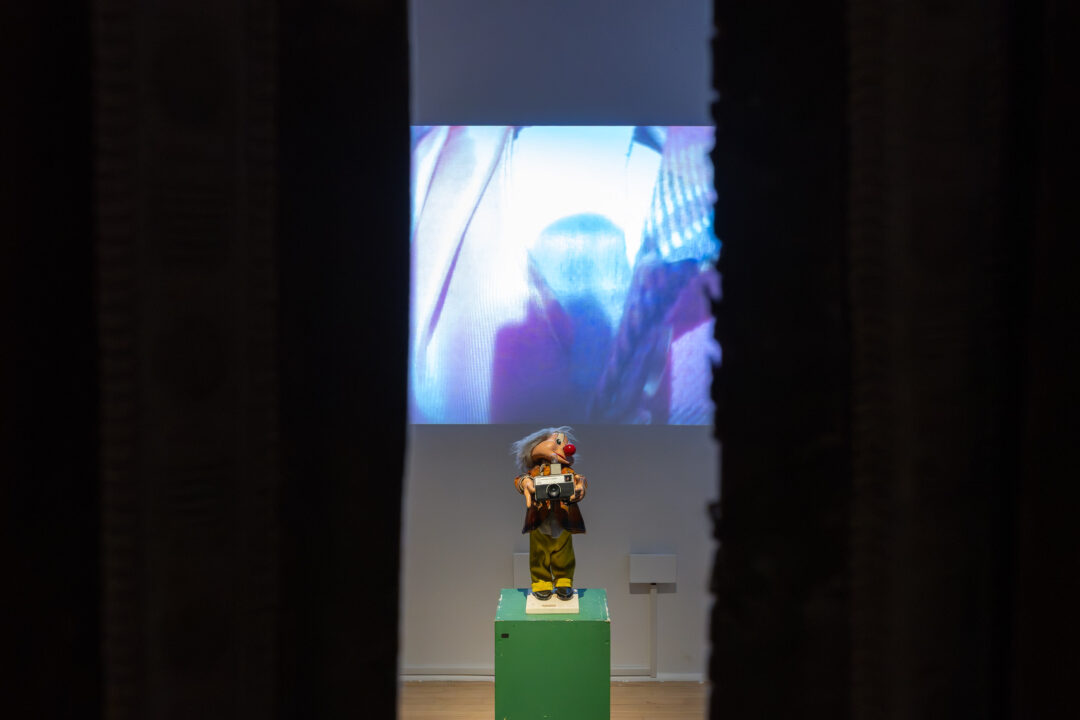
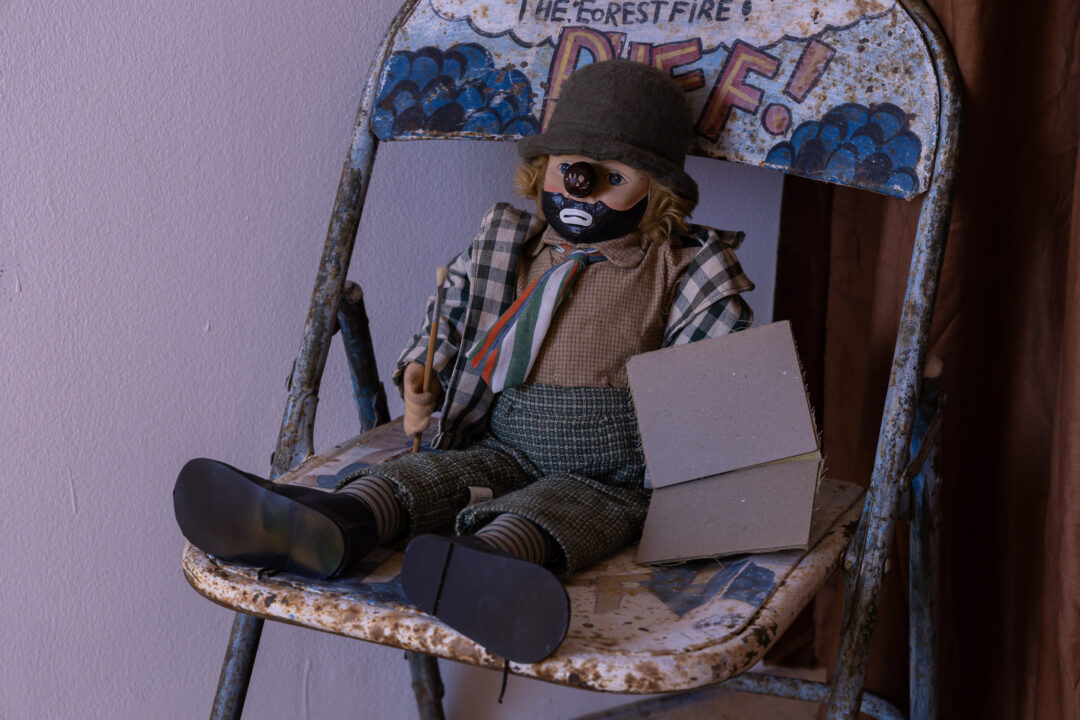
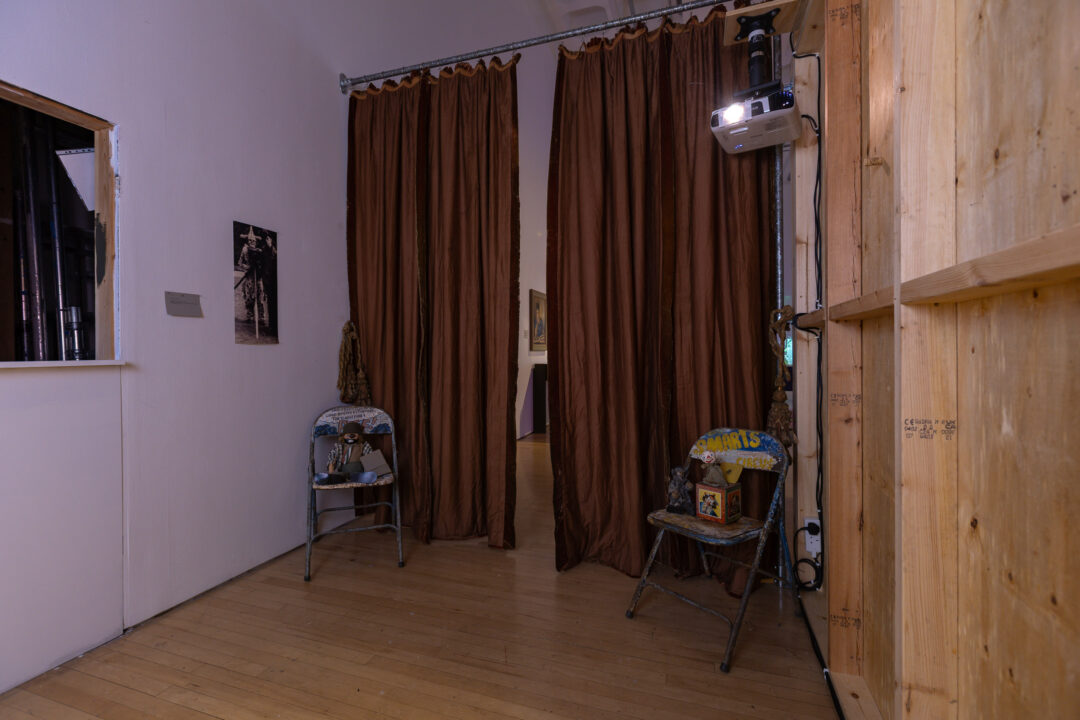
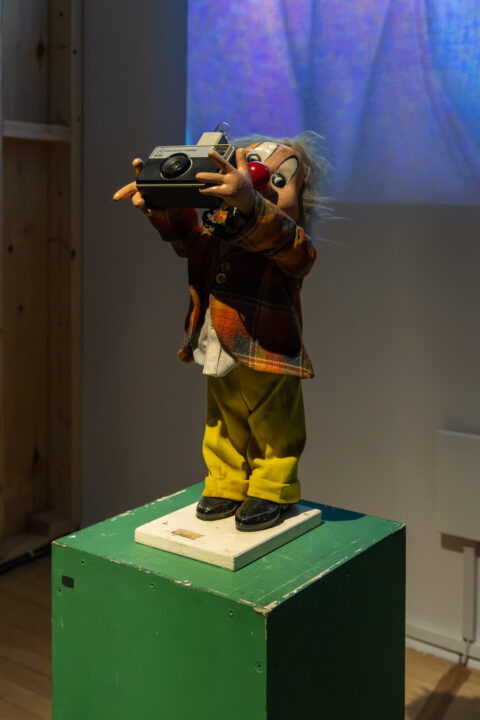

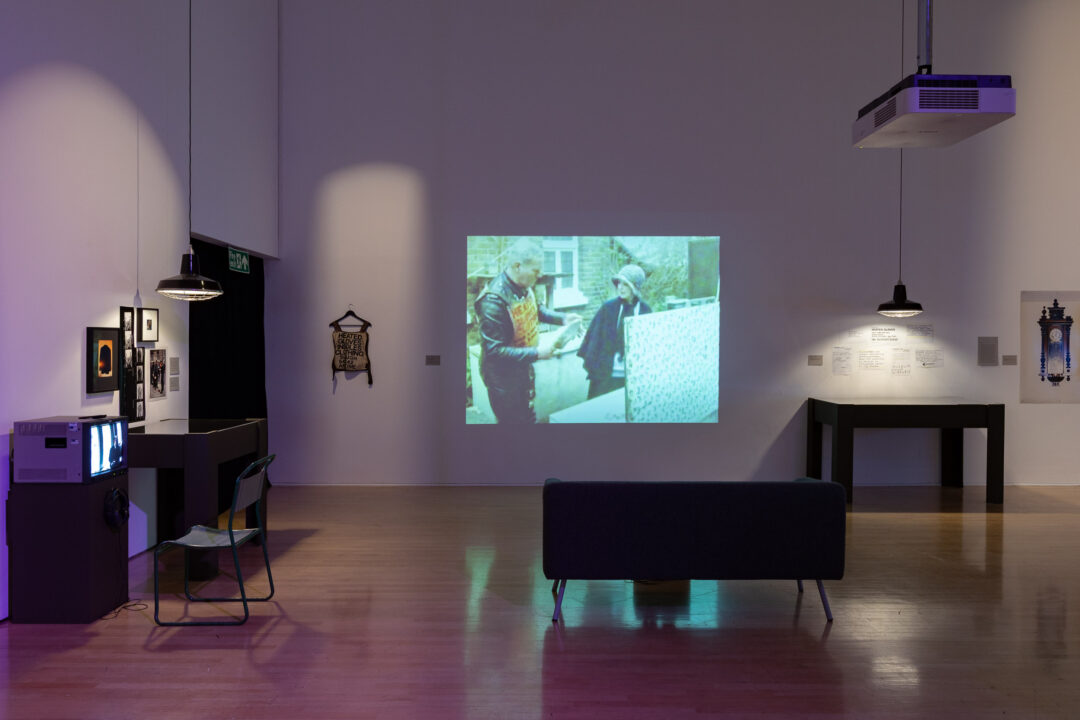
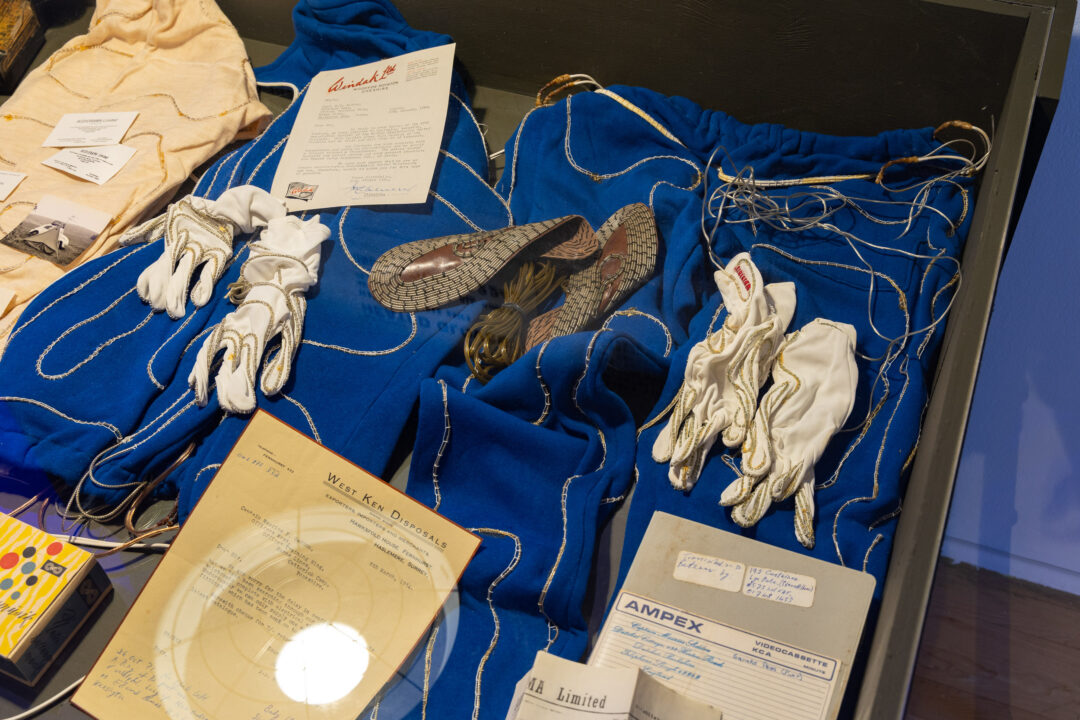
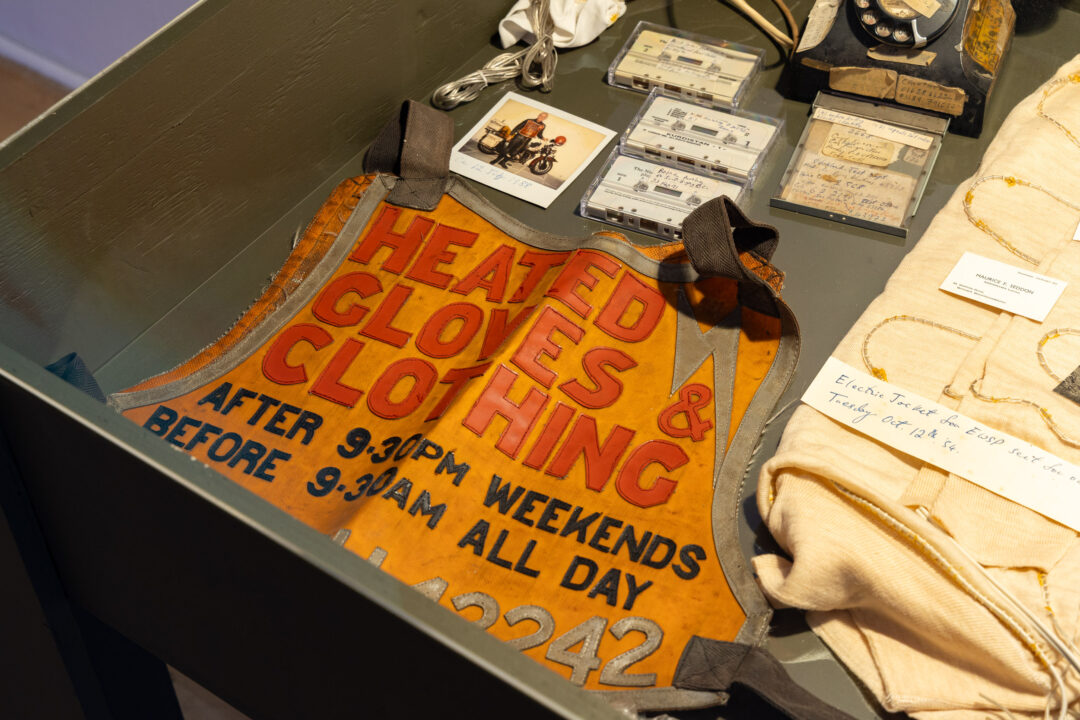
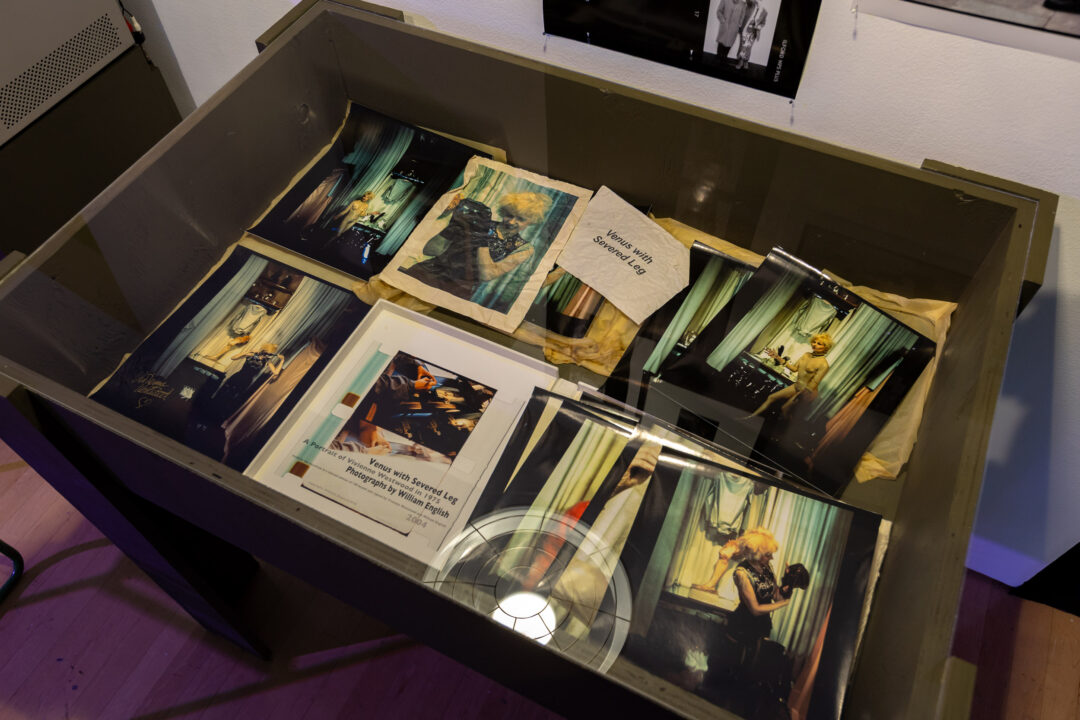
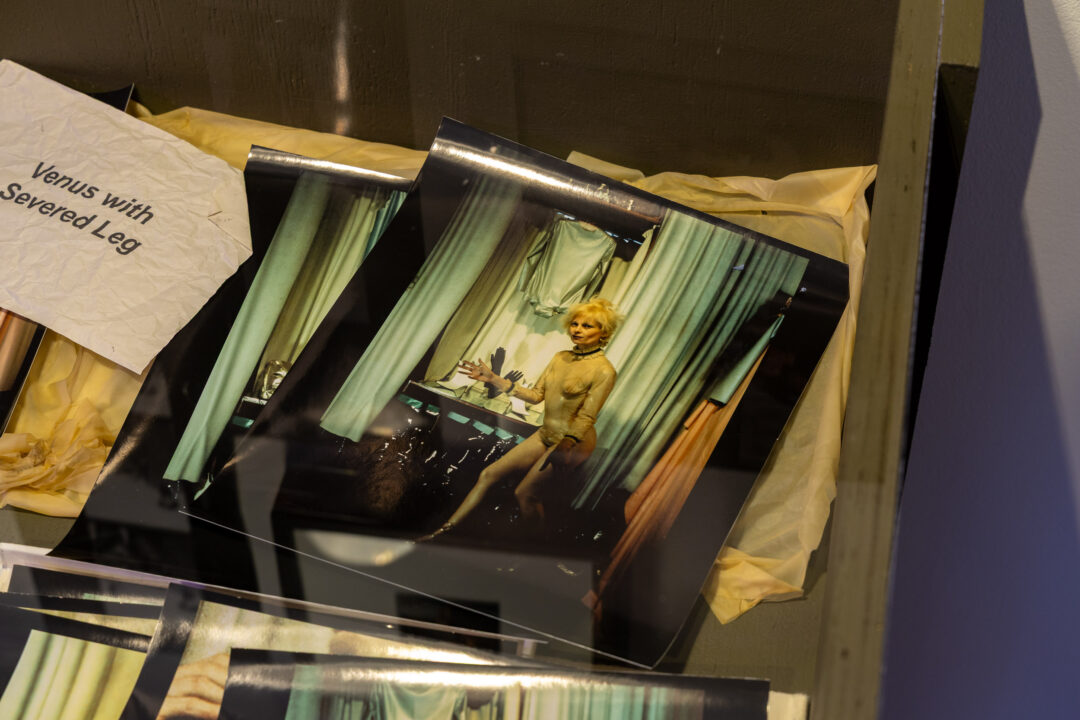
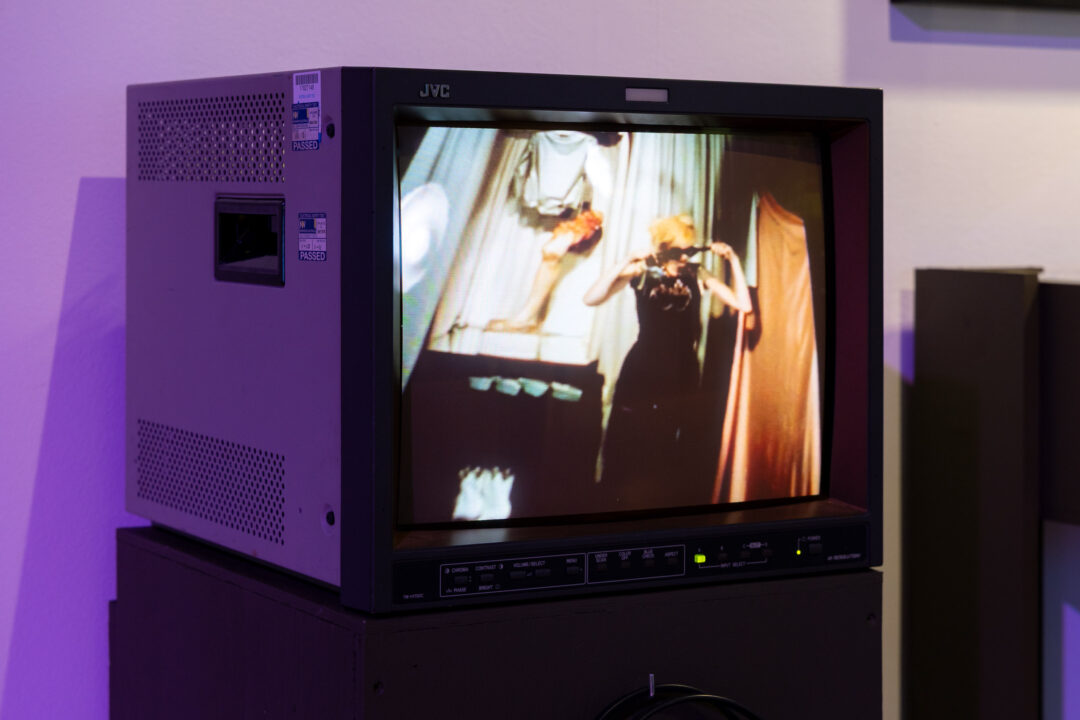

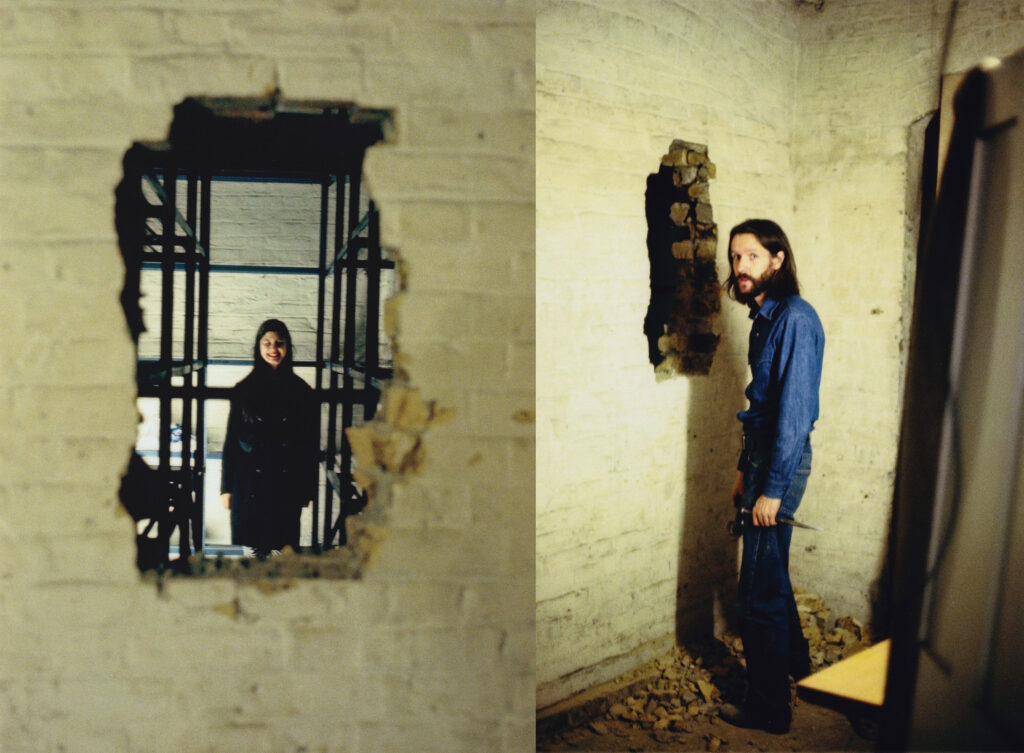
Image at top of page: Left – William English in Dining Room kitchen circa 1982 photograph by Sandra Cross / Right – Sandra Cross in Dining Room kitchen circa 1982 photograph by William English.
Bonington Gallery is delighted to host the culmination of this year’s CADALFEST (Celebrating Adivasi and Dalit Arts and Literature Festival).
After two successful festivals between 2022-24, at locations within the UK and India, this third instalment will culminate with a two-day programme of screenings, discussions, workshops and masterclasses at Bonington Gallery, offering audiences a closer, more sustained engagement with contributors than on previous occasions.
This new, more interactive format will allow audiences to work closely, and embark on a two-day journey, with the filmmaker Jayan K. Cherian, the writers and poets Gogu Shyamala and Jitendra Vasava, the writers and researchers Gopika Jadeja and Priteegandha Naik, as well as the Jangama Collective.
This year’s festival also celebrates the 10-year anniversary of the network on Dalit and Adivasi literature that was launched by the first conference on Dalit literature at Nottingham Trent University in June 2014.
10 am – 12 pm: Gopika Jadeja and Jitendra Vasava, ‘Adivasi lives in forest, village, city’.
Jitendra Vasava and Gopika Jadeja have been working over the past decade to translate and publish Adivasi poetry from western India, including Vasava’s own poetry. Beginning with a song in celebration of the Earth, Vasava and Jadeja will weave through Vasava’s poetry in Dehwali Bhili and English translation, video footage of readings by other Adivasi poets and reflections on poetry, orality and Adivasi struggles.
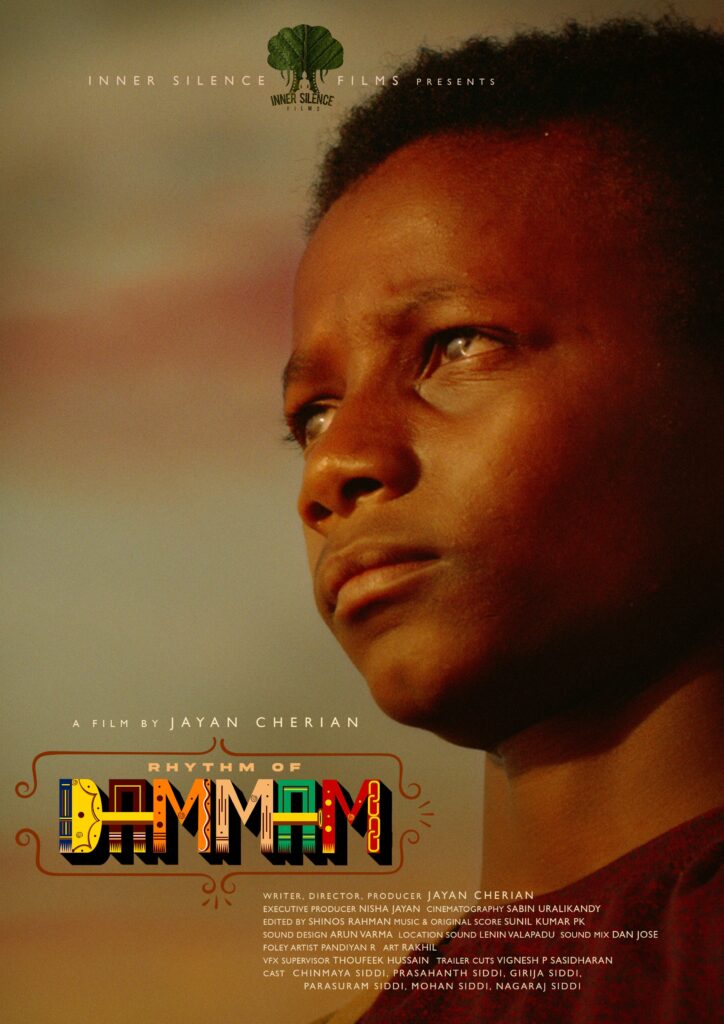
1 – 3 pm: Screening of Rhythm of Dammam, a film by Jayan K. Cherian, followed by a discussion with the filmmaker.
In Uttara Kannada, India, Jayaram Siddi, a twelve-year-old boy, is believed to be possessed by the spirit of his late grandfather, Rama Bantu Siddi. Despite seeking help from local black magicians, Jayaram’s condition remains unchanged. He escapes into a dream world, using ‘magical’ instruments from his grandfather to connect with his ancestors. However, he becomes overwhelmed by the agonizing history of his ancestors’ chattel slavery, losing touch with reality. Jayaram drops out of school, and his family strives to restore his balance by embracing tribal rituals and Dammam music, both vital to their cultural heritage. The film delves into Jayaram’s struggle with intergenerational trauma, emphasizing the challenges faced by him and his family in finding healing and stability.
Rhythm of Dammam is a groundbreaking production that brings to light the little-known Siddi community of India, also known as the Sheedi or Habshi, who primarily reside in regions like Karnataka, Gujarat, and Hyderabad in Telangana. The Siddi people trace their ancestry to the Bantu people from Southeast Africa, who were enslaved by Portuguese traders and brought to the Indian subcontinent between 1530 and 1740. While slavery was declared illegal in British India by 1835 (and continued until 1865 in Portuguese-controlled Goa), the Siddi people endured a different form of bondage within India’s complex caste system after abolition.
Despite some progress in Indian society, the Siddi community continues to experience discrimination and marginalization, limiting their social and economic mobility due to their position within the caste hierarchy. Nevertheless, the Siddi people have shown remarkable resilience in preserving their unique cultural identity. They have achieved this by maintaining their ancestral customs while incorporating elements of Indian culture, particularly traditional Dammam music and tribal rituals. The journey of the Siddi people—from enslavement to current caste-based challenges—is a moving tale of determination and survival. It highlights the enduring impact of societal oppression while showcasing the strength of cultural heritage and community solidarity. The film Rhythm of Dammam offers a fresh perspective on the complex dynamics of caste, race, and identity in contemporary Indian society. It encourages viewers to question their preconceptions and biases while acknowledging the resilience of the human spirit in its pursuit of dignity and freedom.
3:30 – 5:30 pm: Masterclass with Jayan K. Cherian.
In this interactive masterclass, Jayan K. Cherian will focus on the logistics of independent filmmaking in a remote village setting—navigating limited infrastructure, working with non-professional actors, and building a creative process rooted in mutual trust. He will also share insights from his experience living and working with the Siddi community—how they prepared documentary subjects to step into fictional roles and developed the screenplay through oral histories, local legends, and the mythologies shared by elders. These became the foundation for a story that reflects the community’s collective memory, while also raising questions about who gets to represent whom, and how (the politics of representation in cinema).
10 am – 12:30 pm: Priteegandha Naik’s workshop ‘Reclaiming Tomorrows: Liberation through Dalit Futurism’.
This workshop aims to re-imagine and rewrite the intended telos of the caste system as envisioned by Vinayak Damodar Savarkar. It will employ speculative fiction to resist, challenge, and create anti-caste futures. The workshop uses Dalit futurism as a toolkit to build blueprints of tomorrows and bring them to life. It will use Dalit futurism to critique, dream, and create new narratives of hopeful and collaborative futures.
1:30 – 3:30 pm: Gogu Shyamala’s presentation ‘Pain resonates in speculative fiction’ and conversation with Priteegandha Naik, chaired by Basma Mahfoud-Vandermeersh.
In this presentation with poems, songs and stories, Gogu Shyamala will engage in a dialogue with the writings by Dalit women who unveil mundane lived and shared experiences of those who are located at the lowest strata of society and whose lives are coloured by divisions of class, caste and gender. The context of this intersectional oppression of Dalit women is a civil society that is fragmented by religion, while caste compartmentalises India into 3000 fragments and about 25,000 subdivisions. Unlike religion, the division among castes is invisible but firmly in place. This systematic division, called the ‘Caste System’, is premised on codification of the five-fold varna system. This codification subscribes to an ideology of divisions in a hierarchy akin to a vertical ladder, naturalising and internalising the idea of purity and pollution of castes by religion, effecting untouchability and inhumanity. All top four varnas thereby humiliate the last varna in terms of the economy, ethnicity, culture and assertion.
Gogu Shyamala will discuss how the form of speculative fiction is well suited to explore all these caste contradictions and dichotomies in order to create anti-caste literature and the history of contemporary conditions. She will draw on poems and songs as well as her recently published short story, “The Phantom Ladder” (in translation from Telugu by Divya Kalavala), in The Blaft Book of Anti-Caste SF by BLAFT Publications.
4 – 6 pm: Jangama Collective, represented by Lakshmana K P and Mohit Kaycee, screening of the play DaklaKatha DeviKavya, followed by a discussion with Lakshmana K P and Mohit Kaycee.
Daklakatha Devikavya is an experimental play drawing on the epic poetry and stories of the important Kannada writer and founder-member of the Dalit Sangharsha Samiti, K.B. Siddaiah. This experimental piece begins with a re- reading of a cosmogonic myth from a community that is oppressed even amongst the oppressed narrating the origins of the world and of life on it. The play progresses through weaving and unravelling untouchable rituals, beliefs, hunger and desires through song and storytelling. For untouchable communities nudi (speech, sound, voice, and word) is like breath that cannot be separated from the body. The play uses instruments such as the areye and tamte as vines of nudi that enmesh the narrative and sprout new directions from within. Thereby opening up the untouchable world as a world of deep sonic imprints. In a context such as this, the play confronts what happens when the ‘written word’ that has so far been unreachable collides with and becomes an organ of the untouchable body, giving rise to a new relationship of intimacy and struggle. The play provokes an exploration of how the received insights through the experience of untouchability and the ‘written word’ force us to confront what it means to be human in the depths of our being.
Jayan Cherian, from Kerala, holds an MFA in filmmaking from The City College of New York as well as a BA in film and creative writing from Hunter College. He has received numerous honours and recognition for his cinematic works, which have been featured at prestigious film festivals around the world, including the Berlin International Film Festival, Durban International Film Festival, BFI London Lesbian Gay Film Festival, NARA International Film Festival, Rio-de-Janeiro International Film Festival, Kolkata International Film Festival, and Montreal World Film Festival. His career features notable titles including Ka Bodyscapes (2016), Papilio Buddha (2014), The Shape of the Shapeless (2010), and the latest Rhythm of Dammam (2024). He has also contributed significantly to numerous documentaries and short films over the course of his career.
Basma Mahfoud-Vandermeersch is an ESL teacher based in Paris and pursuing a PhD at Université de Montpellier Paul-Valéry (France) in co-supervision with BITS Pilani Goa (India). Her research focuses on the production and reception of translated Dalit writings by women from South India and the diaspora. While looking at the articulation of caste in migration, she is also interested in exploring the possibilities of transnational collaboration, dialogue, and creation between marginalized communities (Dalits x Blacks x Queers x Muslims x Adivasis).
Dr Gopika Jadeja is a bilingual poet and translator and writing in English and Gujarati, active both in her native India and internationally. As part of a broadly engaged creative, scholarly and pedagogical practice, Gopika is Editor-at-Large (Singapore) for Wasafiri: International Contemporary Writing and Coordinating Editor of the journal PR&TA: Practice, Research and Tangential Activities—a peer-reviewed journal of creative practice with a focus on SE Asia based in Singapore. Besides this, she publishes and edits a print journal and a series of pamphlets that are part of a performance-publishing project called ‘Five Issues’. A recipient of the inaugural PEN Presents Award (South Asia) and the Charles Wallace Scholarship for Creative Writing, Gopika’s poetry and translations have been published in Modern Poetry in Translation, Asymptote, Cha: An Asian Literary Journal, Wasafiri, Cordite Poetry Review, Indian Literature, Sahcharya, Vahi, etc. Her work has also appeared in anthologies like The Art and Craft of Asian Stories: A Writer’s Guide and Anthology, A Thousand Cranes for India: Reclaiming Plurality Amid Hatred, No News: 90 Poets Reflect on a Unique BBC Newscast, The Blaft Book of Anti-Caste SF, etc. Gopika is currently working on a project of English translations of poetry from Gujarat, including Dalit and Adivasi poetry as well as a monograph based on her doctoral research. Her collection of poetry, What Parvati Does Not Say is forthcoming from Red River Press, India.
Judith Misrahi-Barak is Professor in Postcolonial Studies at the English Department, Université de Montpellier Paul-Valéry, France. She is a member of the research centre EMMA, and her areas of specialisation and publication are Anglophone Caribbean, Indo- and Sino-Caribbean literatures, diaspora and migrant writing, and Dalit literatures. Her monograph in French is entitled Entre Atlantique et océan Indien : les voix de la Caraïbe anglophone (Classiques Garnier, 2021). She is Co-Investigator on the AHRC-funded Research Network Series ‘Writing, Analysing, Translating Dalit Literature’ and its Follow-on Grant ‘On Page and on Stage: Celebrating Dalit and Adivasi Literatures and Performing Arts’. She is also General Editor of the series PoCoPages (Pulm, Montpellier) and she has co-edited special issues for The Journal of Commonwealth Literature (‘Dalit Literature’, 2019) and for Interventions: International Journal of Postcolonial Studies (‘Thanatic Ethics’, 2023). Among the volumes she has co-edited are the recent Kala Pani Crossings: Revisiting 19th century Migrations from India’s Perspective (Routledge, 2021), Kala Pani Crossings, Gender and Diaspora: Indian Perspectives (Routledge, 2023) and The Routledge Companion to Caste and Cinema in India (Routledge, 2023).
Shohini Barman is a Doctoral Candidate at the School of Arts and Humanities at Nottingham Trent University. She completed her Undergraduate and Master’s degrees in English from Jadavpur University (Kolkata, India). Her current research is on Dalit Literature in Bengal.
Mrigakshi Das is a Ph.D. candidate in English Literature at Nottingham Trent University, UK. Her research focuses on the assertion of Adivasi identity in Adivasi literature and cinema, with broader interests in Adivasi and Indigenous studies. She holds a Bachelor’s and a Master’s degree in English from the University of Delhi, India.
Dr Priteegandha Naik is an Assistant Professor at the Mukesh Patel School of Technology Management & Engineering, NMIMS University, where she teaches Communication Skills and other Humanities-centric courses. She is interested in exploring caste and gender in Indian Science Fiction. In particular, she has worked on Dalit Futurism and on understanding Dalit futures in speculative fiction, art, literature, and film and their consequent relevance to the anti-caste movement.
Dr Gogu Shyamala is one of the foremost contemporary Dalit writers in India, as an award-winning author, researcher, editor, and biographer writing in Telugu. Her collection of short stories Father may be an elephant and mother only a small basket, but… in English translation is a landmark in Indian literature, and her most recent publication is the short story ‘The Phantom Ladder’ (in translation from Telugu by Divya Kalavala), in The Blaft Book of Anti-Caste SF. Among her publications are anthologies of Dalit women’s writings in Telugu, and the biography of the first Dalit woman legislator, T.N. Sadalakshmi in the former state of Andhra Pradesh, India. She is the co-editor of the Oxford Anthology of Telugu Dalit Writing in English (OUP). She holds a PhD in the area of Dalit Women Biographies, Gender and Caste in Telangana, from the English and Foreign Languages University, Hyderabad. She studies Dalit women’s literature and the history and mythology of Dalit literature as well as collecting palm leaf manuscripts of Dalit Puranas for contemporary scholarly studies.
Dr Nicole Thiara is Senior Lecturer in English at Nottingham Trent University, UK, and Co-Lead of the Postcolonial and Global Studies Research Group as well as Principal Investigator on the AHRC-funded Research Network Series ‘Writing, Analysing, Translating Dalit Literature’ (2014-16) and its Follow-on Grant ‘On Page and on Stage: Celebrating Dalit and Adivasi Literatures and Performing Arts’ (2020-23). She teaches postcolonial and contemporary literature, and her area of research is Dalit, Adivasi and diasporic South Asian literature; her current research project is on the representation of modernity in Dalit literature. Her recent publications include ‘The Caste of Nature: Wholesome Bodies and Parasites in Bimal Roy’s Sujata and Gogu Shyamala’s “A Beauteous Light”, The Routledge Companion to Caste and Cinema in India, ed. by Judith Misrahi-Barak and Joshil K. Abraham (Routledge, 2023) and, with Judith Misrahi-Barak and K. Satyanarayana, the critical volume Dalit Text: Aesthetics and Politics Re-imagined (Routledge, 2019) and the special issue on Dalit Literature in the Journal of Commonwealth Literature 54 (1), March 2019.
Dr Jitendra Vasava is a poet from Mahupada village Narmada district of Gujarat, who writes in Dehwali Bhili, Hindi and Gujarati. He is the founding president of Adivasi Sahitya Academy and edits Lakhara, a magazine dedicated to Adivasi voices. Following his doctoral research on the cultural and mythological aspects of Dehwali Bhili oral narratives he is doing research on the environmental knowledge systems of the Bhils as a post-doctoral fellow at the Indian Institute of Technology, Gandhinagar. He has published five books on Adivasi oral literature, an anthology of Adivasi poetry from Gujarat and a book of poetry.
Jangama Collective is a Bangalore-based group of theatre artists with diverse cultural backgrounds who believe in creating cultural and political awareness choosing theatre as their way of expression. As an extension of this, the group has engaged itself in creative processes like education, literature, publishing, cinema and social struggles.
Lakshmana K P, founder member of Jangama Collective is an actor, director, poet, and performance educator from Karnataka, India. He graduated from the Intercultural Theatre Institute Singapore in 2018 and from Ninasam Theatre Institute in 2012. Lakshman has been exploring questions around Dalit aesthetics in performance, and his two recent plays We the People of India and Daklakatha Devikavya explore intersecting questions about Dalit political modernity and cultural memory.
Santosh Dindaguru is from Dindaguru of Channarayapattana-taluk-Karnataka. He holds a diploma from Ninasam and a master’s degree in Drama. He was inspired by Babasaheb Ambedkar’s thoughts and has persistently tried to bring awareness about caste discrimination and its impact on the society through poems, stories and plays. He is the founder of “Neladani”, an organization in his village-Dindaguru. Santosh is a recipient of DeccanHerald ChangeMaker-Award in 2023. Currently he is working as a theatre teacher in Poorna Learning Center in Bangalore.
Bharath Dingri is from Ashapura, Raichur District-Karnataka. He was introduced to the Songs of Resistance at a very young age by his father who is a street play artist and grew up traveling to different villages and regions and played the Tamate along with his father during performances. Having worked in well-known repertories in Karnataka, he did his Diploma from Ninasam. He also has a Diploma in Journalism.
Bindu Raxidi is from Raxidi of Sakaleshapura-taluk-Karnataka who grew up as a child artist. She completed her BBM. Later she worked in BPO agency in Mangalore. She holds a Diploma from Ninasam Theatre Institute and went on to be a part of Ninasam-Tirugaata Repertory for three years. She founded a theatre team called “Act-React” in Bangalore. She has established herself as an actress in Kannada and Tulu Cinema Industry and in Kannada theatre.
Ramika Chaithra is from Bangalore, Karnataka who has been doing theatre for the past 8 years. She completed her theatre course from Banna Abhinaya Rangashaale and attended various theatre workshops in Bangalore. She has acted in various theatre groups and also went on to act in TV serials and Cinema. After completing her B.Com., she has taken up acting and modelling as her profession.
Narasimharaju B K originating from Bevinahalli Sira, Karnataka, Narasimharaju’s expertise lies in playing the areye (urume). He comes from a lineage of areye players, having started when he was 6 years old. He commonly performs in festivals and ceremonies, and he has performed the areye in a contemporary performance setting in Singapore for a dance piece ’Yahi’. He also holds a master’s degree in Kannada literature and a bachelor’s in Education.
Shwetha Rani HK is a theatre practitioner from Hassan, working in theatre for the past 11 Years. She holds a Diploma in theatre by Ninasam and the National School of Drama, New Delhi, specialization in acting. She worked as an actress and technician in Ninasam, Shivsanchara and Janamanadaata Reportry Companies. She taught in Ninasam for two years. Currently, she is teaching and also the Principal of Sri Shivakumara Rangaprayoga Shaale, Sanehalli.
Poorvi Kalyani is a singer, composer and actor who grew up in the presence of theatre from a very young age as her parents are from Professional modern Theatre. Formally trained in theatre music by her mother, she later on practiced Hindustani and Carnatic Classical music. She is also a dancer who is trained in Bharatanatyam. Along with being an artist, she has also chosen a career in Finance and has a working experience in GST and is currently pursuing her law degree.
Mohit Kaycee is a Ph.D. Candidate in the Anthropology of Religion at Columbia University. Previously he worked at India Foundation for the Arts (IFA) and the Centre for the Study of Social Exclusion and Inclusive Policy (CSSEIP) at National Law School (NLSIU), Bangalore. Since 2012 Mohit has been closely associated with Kotiganahalli Ramaiah and his work in pedagogy and performance at Terahalli Hill in Kolar. He has also worked on documenting ritual cultures, oral-performative practices, and textual collections of marginal communities across Karnataka.
Skanda Ghate is from Bangalore. He began his theatre journey from a very young age and has been consistently working in Kannada Theatre since then. After completing his engineering degree, he decided to take up theatre as a profession and finished his diploma in theatre arts from Ninasam. Currently he is a member of Jangama Collective and has been a part of various plays and productions in different capacities.
Sriharsha G N is a Bangalore based theatre artist. Software Engineer by profession, he has worked in several theatre productions in Kannada, English and Hindi languages. He is currently a volunteer at Jangama Collective and Artists Conservatory.
Manju Narayan has been a Bangalore based freelance theatre practitioner in the lighting department for the past 15 years. He has been working with different genres such as classical and contemporary dance, ramp walk, and puppetry, predominantly in Kannada plays. Manju Narayan also holds PG in English from Bangalore University, a Diploma in theatre, a Diploma in Ambedkar studies, and a Diploma in Gandhi studies from the same University.
Sachin Ranganath is a Bangalore based theatre light designer. Civil Engineer by profession, he has worked in several theatre productions in Kannada.
Manoj Kumar K. is from Channarayapatna of Hassan district. From his schooling days, he learned Yaskshagana and performed in many plays across Dakshina Kannada. Along with his Bachelor’s, he has got a Diploma in Theatre arts from SDM College, Ujire. He is a Banker by profession. His major theatre plays are – A Mid-Summer Night’s dream, Maduve Hennu, Shashtravyuahagalu, Ooru-Keri, Krishna Sandhana, We the people of India.
Chandra Shekhara K, founder member of Jangama Collective, is an Actor, Director, Musician and teacher from Karnataka, India. He graduated from Ninasam theatre institute Karnataka and he has a Master’s Degree in performing arts from Bangalore University. He has been traveling across the world performing. He has performed in many national and international theatre festivals in India and abroad.
Image at top of page: Film still from Rhythm of Dammam (2024), directed by Jayan K. Cherian.
Following an online screening and Q&A with artist Subash Thebe Limbu in 2022, we are delighted to present an in-person screening of Ningwasum (2021) and Ladhamba Tayem; Future Continuous (2023), followed by a live Q&A.
The screening (55 mins) will be followed by a discussion and Q&A led by Nicole Thiara where Subash will discuss how his work draws on and develops Indigenous Futurism as well as Adivasi Futurism.
Ningwasum (2021) is a Yakthung science fiction documentary film/video-work narrated by Miksam, a time traveller from a future Indigenous Nation. The film follows two time travellers, Miksam and Mingsoma, played by Subin Limbu and Shanta Nepali respectively, in the Himalayas weaving indigenous folk stories, culture, climate change and science fiction. The film explores notions of time, space and memory, and how realities and the sense of now could be different for different communities. Drawing from Adivasi Futurism and inspired by Afrofuturism and Indigenous Futurism, Ningwasum imagines a future from an Indigenous perspective where they have agency, technology, sovereignty and also their indigenous knowledge, culture, ethics and storytelling still intact.
The plot of Ladhamba Tayem; Future Continuous (2023) depicts a conversation between two indigenous figures from different historical timelines, the first a real 18th century Yakthung warrior called Kangsore fighting the colonial army, and the other an astronaut and time traveler from the distant future. They discuss the space-time continuum from their perspectives, and in doing so, ask the viewers — who exist between the past and future — to investigate their own relationship to the passage of time. The time traveller indicates what the future might look like for us or possibilities we want to strive for, while the warrior reminds us of the fight against colonialism and struggles we shall overcome.
In the future, the Indigenous nationalities will have created a technique called thakthakma – which literally means to ‘weave handloom’, a term inspired by our ancestors’ weaving practice – a technique of entering different timelines or in other words weaving time. So, Subash thinks of his works as weaving stories that are not linear but intricately interwoven. And along the same vein, this work plays with the idea of time as not something rigid but ductile or weavable, which in turn paves the way for questions like how we might want to weave the future.
This event is part of the third series of CADALFEST and organised in collaboration with Formations and the Bonington Gallery. CADALFEST (Celebrating Adivasi and Dalit Arts and Literature Festival) is an international festival series dedicated to the writing and performance arts by writers whose work creatively resists caste discrimination and social exclusion in India: Dalit Adivasi Text.
Happening in Nottingham during the time of this event, we recommend visiting the exhibition Kolam (கோலம்) that has been curated by Raghavi Chinnadurai at Primary, Nottingham. This exhibition explores themes connected to our event, and also features Osheen Siva who exhibited at Bonington Gallery in Spring 2024.
Image: Subash Thebe Limbu, NINGWASUM 2021, video still. Courtesy of the artist.
Subash Thebe Limbu (he/him) is a Yakthung (Limbu) artist from Yakthung Nation (Limbuwan) from what we currently know as Eastern Nepal. He works with sound, film, music, performance, painting and podcast. His Yakthung name is ᤋᤠᤱᤛᤠᤱ Tangsang (Sky).
Subash has MA in Fine Art from Central Saint Martins (2016), BA in Fine Art from Middlesex University (2011), and Intermediate in Fine Art from Lalit Kala Campus, Kathmandu. His works are inspired by socio-political issues, resistance and science/speculative fiction. Notion of time, climate change, and indigeneity or Adivasi Futurism as he calls it, are recurring themes in his works.
Subash is the co-founding member of Yakthung Cho Sangjumbho (Yakthung Art Society) and Haatemalo Collective. Based in Newa Nation (Kathmandu) and London. Follow Subash on Instagram.
Manish Harijan is a Nepal born artist who lives in Sheffield, UK. He was the recipient of the NAE Open Future Exhibition Prize in 2023, and the resulting exhibition, Untouchable Utopia, is currently showing at New Art Exchange until 11 January 2025.
The son of a shoemaker from the so-called lower caste or Dalit in Nepal, Manish questions the injustices inflicted upon minorities and the lived experiences of vulnerable populations in all societies around the world. His work traverses East and West, casting iconic images from religion to pop culture, smoothly embedding them in one canvas to create bold, beautiful and thought-provoking paintings. Inspired by Nepali art traditions of Thangka and Paubha, Manish also borrows styles from graphic novels, especially manga and popular superhero comics.
Manish’s compositions reference a variety of subjects from social issues of caste discrimination to art history, merging local stories with the global, fairy tales with current news pieces, mythology with facts — questioning both the portrayal and the portrayed. In 2012, for his first solo exhibition at Siddhartha Art Gallery in Kathmandu, Manish brought together these themes challenging the status quo of tradition, hierarchy, religion and beliefs in Nepal. Unfortunately, the gallery was vandalised and Manish was sent death threats and accused of being anti-Hindu for portraying Hindu gods in superhero costumes. The exhibition was shut down and a court cases were filed; UNESCO issued a press release to support the artist’s freedom of expression.
Deeply affected and saddened by the state of affairs, Manish moved to the UK, where he enrolled in a Master of Fine Arts programme at Sheffield Hallam University. While at University, he redoubled his commitment to explore the rights of marginalised people through art, participating in art projects that gave voice to the rights of populations that are vulnerable, stateless and at high-risk. He graduated in 2019 and was awarded the Dianne Willcocks Lifelong Learning award.
Manish is one of the artists whose paintings has been shortlisted and acquisitions for the UK’s Government Art Collection 2020/21. His works have also been exhibited at Welt Museum in Vienna, Museum of Communication in The Hague, Nepal Art Council in Kathmandu, Yorkshire Art Space in Sheffield, India Art Fair in New Delhi, CKU Copenhagen in Denmark, October Gallery in London, ROSL Gallery in London, Bloc Project Sheffield, Artist’s Journey #3 in the UK and Solo show at Yorkshire art space gallery 2022 at Sheffield UK. Besides paintings, Manish also experiments with installations, sculptures and multimedia. He works at his studio in Yorkshire Art Space
Neeraj Bunkar is a PhD Scholar at the Department of Humanities at Nottingham Trent University with a specific interest in Caste, Dalit, Rajasthani folklore, Oral History and Cinema. He is researching Rajasthan-based Hindi cinema from the Dalit standpoint. He published, ‘Spring Thunder: Adivasi Resistance for ‘Jal, Jangal, Jameen’’ (2022) and the book review, ‘Subalternity at the Centre: A Young Diary Demands Radical Change’ (2024) the Economic and Political Weekly. He regularly contributes to platforms such as Forward Press and RoundTable India.
Nicole Thiara (she/her) is co-lead of Nottingham Trent University’s Postcolonial and Global Studies Research Group and Principal Investigator on the AHRC-funded Research Network Series Writing, Analysing, Translating Dalit Literature and its Follow-on Grant On Page and on Stage: Celebrating Dalit and Adivasi Literatures and Performing Arts.
She teaches postcolonial and contemporary literature at Nottingham Trent University. Her area of research is Dalit and diasporic South Asian literature and her current research project is the representation of modernity in Dalit literature.
Mrigakshi Das, from Odisha, India, is a PhD candidate at the School of Arts and Humanities at Nottingham Trent University in the UK. Her research interests include Adivasi and Dalit literature, as well as decolonial and postcolonial studies. Her current research explores Adivasi literature and cinema, focusing on expressions of Adivasi identity and otherness through these mediums.
The CADALFEST series [Celebrating Adivasi and Dalit Arts and Literature Festival] has taken place in various locations in the UK and in India between October 2022 and February 2023, with the opening and final events taking place in Nottingham. These events included poetry, music, drama performances and films, along with Workshops, Masterclasses and public discussions with practitioners of both folk and contemporary performative art forms with the contribution of academic researchers who introduced performances, conducted interviews, contributed to the discussions, and more.
The aim, in the CADALFEST series, is to bring people from different walks of life together, sharing perspectives, enjoying themselves and learning from each other. Creativity and empowering energy channelled through the folk and performing arts productions takes centre stage— the horrors of casteism should not be ignored but the joy of togetherness, limitless creativity and social empowerment strategies should come to the forefront in a much more visible way.
Established in 2020, Formations is an event programme led by NTU’s Postcolonial and Global Studies Research Group in collaboration with Bonington Gallery. The series foregrounds the work of underrepresented writers, academics, artists, intellectuals and activists worldwide who address inequalities of all kinds, often bringing people from different places and working practices together for important conversations.
The Blue Description Project (2023) is a new experimental version of Derek Jarman’s seminal film, Blue (1993). It features expanded accessibility measures including audio description, creative captions and in-person British Sign Language interpretation.
“Moving beyond words.” – Time Out “Extraordinary“ ★★★★★ – The Times
In 1993, Derek Jarman released Blue, an epoch-defining account of AIDS, illness, and the experience of disability in a culture of repressive heteronormativity and compulsory able-bodiedness. Though often referred to as a feature film, Blue never existed exclusively in one medium. It was screened in theatres, simulcast on television and radio, released as a CD, and published as a book, creating opportunities for many different kinds of sensory abilities—visual, aural, and textual—to experience the work.
Conceived by artists and writers Christopher Robert Jones, Liza Sylvestre, and Sarah Hayden, The Blue Description Project creates a new, experimental iteration of Blue on the 30th anniversary of its release and Jarman’s death. Reflecting Blue’s standing as a foundational work of Crip* art, the project challenges ableist hierarchies in art while focusing on the generative possibilities of difference and interdependence.
In 1994, Jarman wrote in Chroma: “If I have overlooked something you hold precious — write it in the margin.” Taking up this invitation to write in the margin, The Blue Description Project builds on the multifaceted nature of Jarman’s work through newly commissioned and expansive accessibility.
*Crip—Cripistemology and the Arts.


The event is open to everyone and is intended as an immersive and collective experience for those who may benefit from accessibility provision or not.
The film screening will have creative captions and audio description that is edited into the main soundtrack of the film. It will also be British Sign Language (BSL) interpreted. The discussion afterwards will be live-captioned and BSL-interpreted.
During the screening, the space will be dim, with only the BSL interpreters illuminated via spotlights. The film soundtrack will play into the space at ‘cinema level’ volume.
The gallery is wheelchair accessible via a lift. Visit our website for general access information for our building.
Visit our YouTube channel to watch a video tour of the journey into our gallery from the street.
Invigilators and staff will be on hand throughout the evening to offer any assistance needed.
Accessible toilets are very close by to the gallery.
If you would like to discuss any further access requirements, or identify a way that we can make your attendance easier then please email us.
The Blue Description Project (BDP) is produced by Liza Sylvestre and Christopher Robert Jones (Crip*—Cripistemology and the Arts) in partnership with Sarah Hayden (Voices in the Gallery). BDP is made possible by a grant from the Andrew W. Mellon Foundation, with support from the College of Fine and Applied Arts at the University of Illinois Urbana-Champaign and additional support from the Southampton Institute for Arts and Humanities HEIF Research Stimulus Fund.
Liza Sylvestre is a transdisciplinary artist and research assistant professor within the College of Fine and Applied Arts at the University of Illinois Urbana-Champaign where she has co-founded the initiative Crip*—Cripistemology and the Arts. Her work has been shown internationally at venues such as the Weisman Art Museum (Minneapolis), John Hansard Gallery (Southampton), ARGOS (Brussels), and Museum für Moderne Kunst (Frankfurt). Sylvestre has been the recipient of numerous grants and fellowships, most recently a Joan Mitchell Foundation Fellowship and a Louis Comfort Tiffany Foundation Fellowship. She has been artist-in-residence at the Weisman Art Museum and the Center for Applied and Translational Sensory Science and in 2019, she received a Citizens Advocate Award from the Minnesota Commission of the Deaf, DeafBlind, and Hard of Hearing. Sylvestre’s work has been written about in numerous publications and books including Art in America, Mousse Magazine, Ocula Magazine, Art Monthly, and SciArt Magazine.
Christopher Robert Jones is an artist and writer based in Illinois. Their research revolves around the “failure” or “malfunctioning” of the body and how those experiences are situated at points of intersection between Queer and Crip discourses. They are a regular contributor to Art Papers magazine and their work has recently been exhibited at the Krannert Art Museum, Gallery 400, and the Weisman Art Museum. Jones is the co-founder of Crip*—Cripistemology and the Arts, a transdisciplinary initiative that is housed within the College of Fine and Applied Arts at the University of Illinois Urbana-Champaign, where they are also a research assistant professor.
Sarah Hayden is a writer and Associate Professor in Literature and Visual Culture at the University of Southampton. From 2019–2023, she led “Voices in the Gallery,” a research, writing and curatorial project on intersections of voice, text and access in contemporary art, funded by the AHRC. In 2022, she developed slow emergency siren, ongoing: Accessing Handsworth Songs in partnership with LUX. Recent writings include as if […] wearing anklesocks (for Sarah Browne’s Buttercup) and essays on Charlie Prodger for Secession Vienna and captioning as “unvoiceover” for Angelaki.
Elaine Lillian Joseph is an audio describer based in London and Birmingham. She has a BA in Modern Languages (German) and English Literature and trained as a describer at ITV under Jonathan Penny. She is a founding member of SoundScribe, a global majority collective of audio describers and consultants and a member of Collective Text, an organisation supporting accessibility in art and film through creative captioning, audio description and interpretation. The question that galvanises her practice is how can we honour the labour of access work and create a service that powerfully resonates with users? Collaboration and anti-discrimination activism is key to her work.
A selection of recently completed projects include Eve Stainton’s Impact Driver at the Institute for Contemporary Arts in London, an online screening of Hofesh Shechter’s Political Mother and a newly commissioned audio described track for Black Audio Film Collective’s Handsworth Songs.
The producers of the project wish to thanks everyone who so generously contributed their descriptions to the Blue Description Project. Warm thanks to Elaine Lillian Joseph and Corvyn Dostie. Special thanks to James MacKay, Basilisk Communications, and Zeitgeist Films.
Image credit: Christopher Robert Jones, Liza Sylvestre, Sarah Hayden, Blue Description Project, film still, 2024. Digital movie, captions. 1:20:55. Courtesy of the artists.

Onyeka Igwe
history is a living weapon in yr hand
13 January – 2 March 2024
Exhibition preview: Friday 12 January 6-8pm
Bonington Gallery presents history is a living weapon in yr hand, a solo exhibition of new and reconfigured work by London based artist Onyeka Igwe. The exhibition follows Igwe’s acclaimed solo exhibition A Repertoire of Protest (No Dance, No Palaver) at MoMA PS1 in New York, earlier this year, and ahead of her inclusion in the exhibition Nigeria Imaginary at the national pavilion of Nigeria at the Venice Biennale 2024.
The exhibition will be centred around a new two-screen adaptation of Igwe’s dual timeline experimental film A Radical Duet (2023). In 1947 London was a hub of radical anti-colonial activity, with international intellectuals, artists, and activists such as Funmilayo Ransome-Kuti and Sylvia Wynter, C L R James, Kwame Nkrumah and George Padmore all in London at this time. Each of them was individually agitating for their respective countries’ national independence, but did they meet, and if so, what did they discuss?
The film features fictional characters inspired by these radical figures. It imagines what happens when two women of different generations, but both part of the post-war independence movement, come together in London to put their fervour and imagination into writing a revolutionary play. The film depicts this process and envisages what that play would look like if staged today.

The film will be accompanied by elements of the set design and props from the making of A Radical Duet, taking inspiration from the Jamaican writer and cultural theorist, Sylvia Wynter’s ideas on theatrical adaptation. Wynter builds on Brechtian principles of modern epic theatre and advises on how set design can support a theatre to ‘explode [social] fears by bringing them out into the light of day’.
For this exhibition, Igwe will be working with Collective Text, an organisation supporting accessibility in art and film through creative captioning, audio description and interpretation.
history is a living weapon in yr hand is produced in collaboration with Peer Gallery, London, where it will be presented in autumn 2024.
Onyeka Igwe is a moving image artist and researcher, born and based in London. Her work is aimed at the question: how do we live together? Not to provide a rigid answer as such, but to pull apart the nuances of mutuality, co-existence and multiplicity. Onyeka’s practice figures sensorial, spatial and counter-hegemonic ways of knowing as central to that task. For her, the body, archives and narratives both oral and textual act as a mode of enquiry that makes possible the exposition of overlooked histories. She has had solo/duo shows at MoMA PS1, New York (2023), High Line, New York (2022), Mercer Union, Toronto (2021), Jerwood Arts, London (2019) and Trinity Square Video, London (2018). Her films have screened in numerous group shows and film festivals worldwide. Currently, she is Practitioner in Residence at the University of the Arts London and she will participate in the group show ‘Nigeria Imaginary’ in the national pavilion of Nigeria at the upcoming 60th Venice Biennial in 2024. She was awarded the New Cinema Award at Berwick Film and Media Arts Festival 2019, 2020 Arts Foundation Fellowship, 2021 Foundwork Artist Prize and has been nominated for the 2022 Jarman Award and Max Mara Artist Prize for Women. Onyeka is represented by Arcadia Missa Gallery.
Please contact Sarah Ragsdale sarah@sarahragsdalepr.co.uk
Join us for a free, online talk between Irene Lusztig and Patricia Francis – part of the When I Dare to be Powerful conference.
Patricia Francis and filmmaker Irene Lusztig will explore and discuss the value of archive in bringing voices and their subjective truths from the past into the present. Irene will also show extracts from a couple of her films including her latest release, Richland.
This is the final in the series of online talks and podcast conversations we have been having as part of the When I Dare To Be Powerful in-person international conference.
Bio:
Irene Lusztig is a filmmaker, visual artist, archival researcher, and amateur seamstress. Her film and video work mines old images and technologies for new meanings in order to reframe, recuperate, and reanimate forgotten and neglected histories. Often beginning with rigorous research in archives, her work brings historical materials into conversation with the present day, inviting viewers to explore historical spaces as a way to contemplate larger questions of politics, ideology, and the production of personal, collective, and national memories. Much of Irene’s current work is centred on public feminism, language, and histories of women and women’s bodies, including her debut feature Reconstruction (2001) the feature length archival film essay The Motherhood Archives (2013) and the ongoing web-based Worry Box Project (2011).
Born in England to Romanian parents, Irene grew up in Boston and has lived in France, Italy, Romania, China, and Russia. Her work has been screened around the world, including at the Berlinale, MoMA, Museum of Fine Arts Boston, Anthology Film Archives, Pacific Film Archive, Flaherty NYC, IDFA Amsterdam, RIDM Montréal, Hot Docs, AFI Docs, and BFI London Film Festival and on television in the US, Europe, and Taiwan. She has received grants from the Massachusetts Foundation for the Humanities, Massachusetts Cultural Council, LEF Foundation, New York State Council for the Arts, and Sustainable Arts Foundation and has been awarded fellowships at the MacDowell Colony, the Flaherty Film Seminar, the Radcliffe Institute for Advanced Study, and Harvard’s Film Study Center. She is the 2016-17 recipient of a Rydell Visual Arts Fellowship and a Fulbright Fellowship in Portugal. She teaches filmmaking at UC Santa Cruz where she is Associate Professor of Film and Digital Media; she lives in the Santa Cruz Mountains.
Join us for a free screening of a newly-translated documentary that explores the emergence of performance art in Cuba in the 1980s. The screening will be followed by a conversation with film director and artist Glexis Novoa.
The 1980s was a decade where a new generation of young artists were introducing a radical new artistic language and testing the bounds of the possible and the permissible in the process.
In the late 1970s and the 1980s multiple approaches towards the role and aesthetics of art in a socialist Cuba abounded. One particular strand saw an emerging generation of artists seeking to break free from what they saw as the bureaucratic and ideologically-orientated institutional systems and their ideas about culture. This change in attitude gave rise to a new visual language that prized interdisciplinary practices, multimedia, appropriated and referenced popular culture, religions, regional history and embraced parody and satire.
By the second half of the 1980s the arts were a site of intense discussion about artistic freedom and the nature of genuinely revolutionary art. Performance art played a key role in the articulation of the ideas and concerns of a budding generation.
Please note, this film contains some discussion of sex and nudity.
The film was initially made for the exhibition Losing the Human Form at the Reina Sofia Museum in Madrid, which looked at art in the 1980s in Latin America.
Taking part as part of Bonington Gallery’s Formations programme in partnership with NTU’s Postcolonial Studies Centre.
Glexis Novoa was born in Holguín, Cuba in 1964. Novoa was one of the most radical influences in the vibrant art scene known as, “The Renaissance of Cuban Art of the 80s”, and was the founder of the Provisional group, pioneers of performance, political activism and collectivist practices.
Novoa established himself in Miami in 1995 and has been sharing his time working in Havana and Miami since 2013. He is recognized for his site-specific wall drawings and ephemeral projects around the world, which exist on the border between ephemeral art and architecture. He frequently focuses on the architecture of power and community as the main subject.
Novoa’s work has been exhibited extensively around the world and is part of numerous museum collections.
This multi-channel video installation from internationally-acclaimed photographer Emily Andersen, explores the work and life of Ruth Fainlight (b.1931) – an American-born poet and writer.
Ruth’s intensely visual poetry and fiction touch on themes of psychological and domestic situations, time, memory and loss. Born in New York City in 1931, she moved to England when she was 15. In 1959 she married the writer, Alan Sillitoe, and her many literary friendships included Sylvia Plath, Jane and Paul Bowles, and Robert Graves.
Andersen’s work is an intimate portrait of Fainlight, now aged 91, presenting fragments of the poet’s life. Taking inspiration from Renaissance triptychs and their depiction of different elements of the same subject across three panels, Somewhere Else Entirely captures the poet and writer at her home in London, making notes, on her walks, and in the seaside town of Brighton where she spent her teenage years.
In Somewhere Else Entirely Fainlight talks off-screen, revealing fascinating insights into her life, her creative process, and how she is ‘in the hands of the poem’. In her voiceover, she movingly recites her poem ‘Somewhere Else Entirely’ composed after the death of her husband.
Alongside the exhibition commissioned an essay by Daniella Schreir, editor of the Feminist Film Journal Another Gaze, which can be read here.


Come along to our launch night on Friday 24 March, 6 pm – 8 pm for a first look round the exhibition, alongside Nottingham Women’s Centre in our Vitrines. There will also be free food from 6 pm. Book your free tickets
Emily Andersen is a London-based artist and graduate of the Royal College of Art. Her work has been exhibited in galleries including:
A number of her portraits are in the permanent collection of The National Portrait Gallery, London. She has won awards including the John Kobal prize for portraiture. Her third book Another Place was published in 2023. She is a Senior Lecturer in theory and practice of photography at the Nottingham School of Art & Design at Nottingham Trent University.
Director, Producer, Cinematographer – Emily Andersen
Additional Cinematographer- Bella Riza
Interviews – Kiki Martins and Emily Andersen
Editor – Jonathan Schmidt-Ott
Sound editor – Liam Larkin
Re-recording mixer- Rainer Heesch
Colourist – Jason R. Moffat
Production Assistant – Kyra Paloma
Image: Ruth Fainlight by Emily Andersen
Katja Hock is a practising artist and a senior lecturer in Photography in the School of Art and Design at Nottingham Trent University. Her latest exhibition will present a slide installation, Stillness and Silence that has been developed over the last three years. The work addresses the importance of historical memory to our present perception of our cultural and social context.
As part of this exhibition Katja Hock will be in conversation with Susan Trangmar, Reader in Fine Art, Central Saint Martins College of Art and Design. Located in the Bonington Gallery, this event is open the general public and admission is free.


Wanderlust speaks of the places, real, imagined and metaphorical, that we travel to through our practice as artists, designers, thinkers and educators. It invokes the desire to wander exploring the world as we find it, often straying from the path and discovering a new route.
This exhibition is a snapshot survey of experimental practice across the range of disciplines in the School of Art & Design. The works featured demonstrate the complex process of creation undertaken by practitioner / researchers within the School community including academic, technical and support staff. Wanderlust is curated as a dialogic space, where varied and diverse practices are placed in proximity to each other, opening up possibilities of new discourses, collaborations and projects. A series of events will tease and test out these possibilities starting with the private view on Wednesday 12 January 2011.


